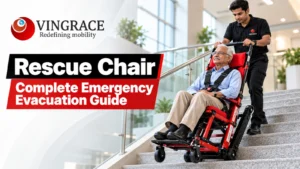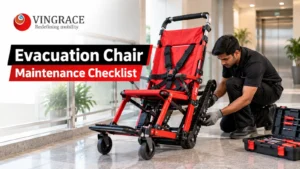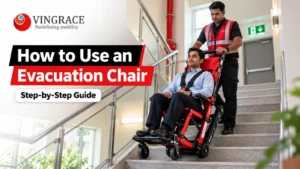
Every multi-storey building has stairs. But not everyone inside can use them. A patient after surgery, an employee with a broken leg, a visitor in a wheelchair or an elderly resident may all be stuck when the lifts stop.
That is why evacuation chairs are now used in almost every type of building. The needs, though, are very different in a hospital, an office and a shopping mall.
This guide explains the main evacuation chair applications, what each building type needs, and how to plan the right setup.
Quick Answer: Where Should Evacuation Chairs Be Used?
Evacuation chairs should be used in any multi-storey building where someone may not be able to walk down the stairs in an emergency. The main users are hospitals and nursing homes, offices and IT parks, schools and colleges, hotels and malls, airports and metro stations, government buildings, factories and high-rise apartments. Place at least one chair at each evacuation staircase, train staff on every shift, and practise during fire drills.
Key Takeaways
- Lifts should not be used in a fire unless they are certified fire or evacuation lifts.
- Hospitals need the most chairs, because many patients cannot walk.
- Offices and public buildings need chairs for staff, visitors and people with temporary injuries.
- Choose powered chairs where people must also be moved up stairs.
Why Every Multi-Storey Building Needs an Evacuation Plan for People Who Cannot Walk
Fire safety plans often assume everyone can walk out. In real life, that is not true. The NFPA notes that people with mobility, sight, hearing or cognitive disabilities need planned help to escape.
Indian law also says this. Section 8 of the RPwD Act 2016 gives persons with disabilities equal protection in emergencies. For details on Indian rules, see our guide on evacuation chair safety standards and compliance in India.
Evacuation Chairs for Hospitals and Healthcare Facilities
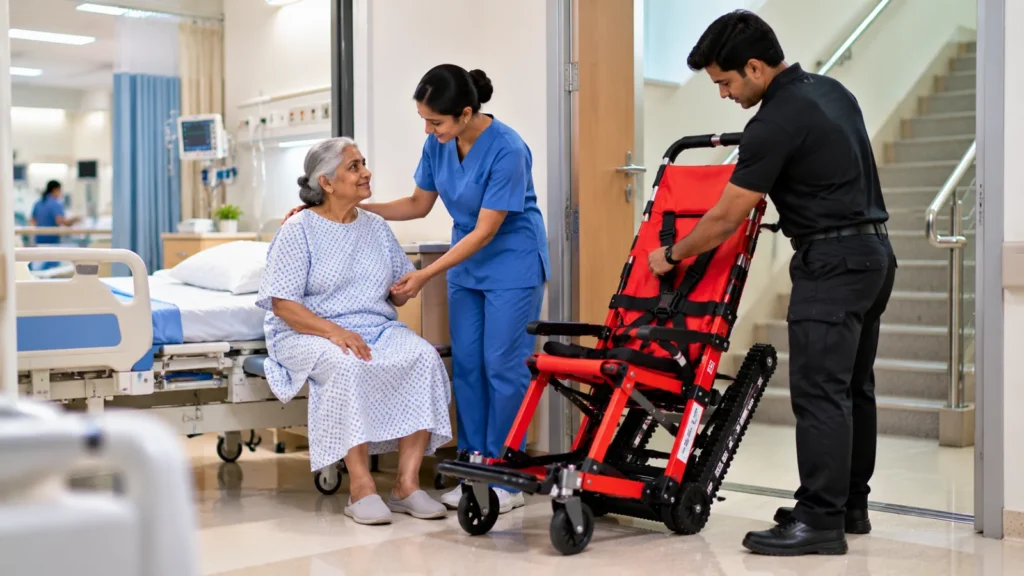
Hospitals have the highest need. Many patients cannot walk at all, and some are connected to drips, oxygen or monitors.
In October 2025, a fire in the trauma ICU of SMS Hospital, Jaipur, showed how hard it is to move critically ill patients quickly (All India Radio). Good planning and the right equipment save time.
Where to place chairs in a hospital
- At every evacuation staircase on floors with wards, ICUs or operation theatres
- Near outpatient (OPD) areas on upper floors
- In diagnostic blocks (MRI, CT, X-ray) on upper floors
- In staff and admin floors for staff and visitors
What hospitals should look for
- High load capacity for heavier patients
- Easy cleaning and infection-control friendly materials
- Head rest and full body straps for weak or unconscious patients
- Powered models for going up from basements or between blocks
Hospitals also follow the NABH 6th edition standards, which include fire and non-fire emergency planning. For bedridden patients who cannot sit up, plan for evacuation sledges or mattresses as well. Our rescue chair guide explains these options. You can also read about hospital and clinic accessibility.
Evacuation Chairs for Offices and IT Parks
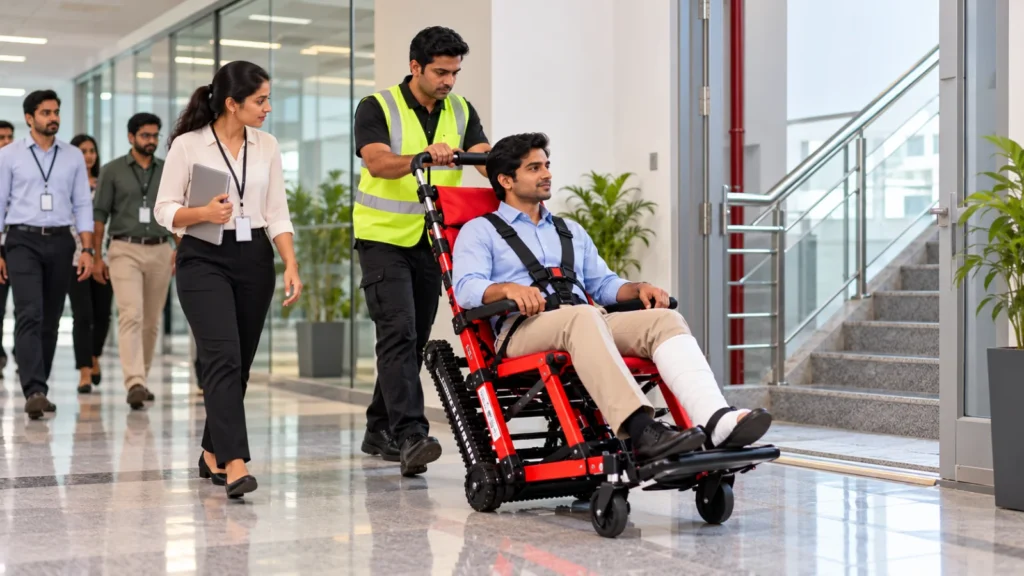
Offices may not have patients, but they do have people who need help. Think of an employee with a sprained ankle, a pregnant colleague, a visitor using crutches or a staff member with a disability.
Office setup tips
- One chair per stairwell, kept at the top floor or the refuge floor
- Fire wardens on every floor trained to use it
- PEEPs (personal evacuation plans) for staff who need help
- Chair use included in yearly fire drills
Large IT parks with many towers should plan chairs per tower, not per campus. See our article on workplace accessibility in India.
Evacuation Chairs for Public Buildings
Public buildings have large crowds and many visitors you do not know in advance. That makes planning harder.
| Building type | Who may need help | Setup tip |
|---|---|---|
| Schools and colleges | Students and staff with disabilities or injuries | Chairs near classrooms on upper floors; train teachers and guards (school accessibility guide) |
| Hotels | Elderly or disabled guests | Chair on each guest floor stair; train night staff |
| Malls and cinemas | Visitors in wheelchairs, elderly shoppers | Chairs at each fire stair; security team trained |
| Airports and metro stations | Passengers with reduced mobility | Powered chairs for underground levels |
| Government offices and courts | Visitors and staff with disabilities | Chairs near public counters on upper floors |
| High-rise apartments | Elderly residents, people with disabilities | At least one chair per tower; train security staff (apartment guide) |
| Factories and warehouses | Injured workers on mezzanines or upper floors | Chairs on each production floor stair |
Manual vs Powered: Which Chair Fits Your Building?
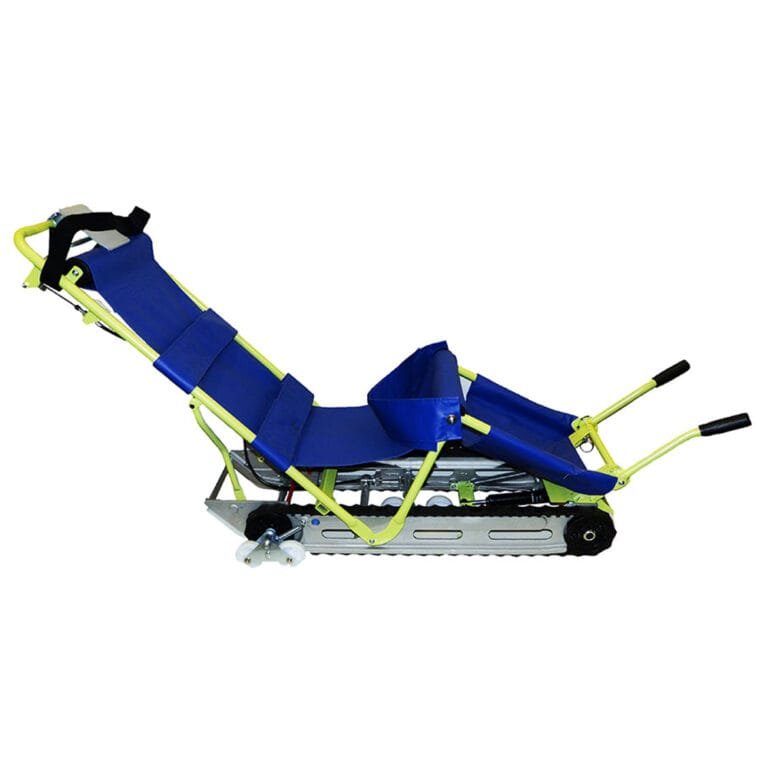
- Manual descent chairs such as the Garaventa Evacu-Trac glide down stairs with brake control. They suit offices, schools, hotels and most buildings where people exit downward.
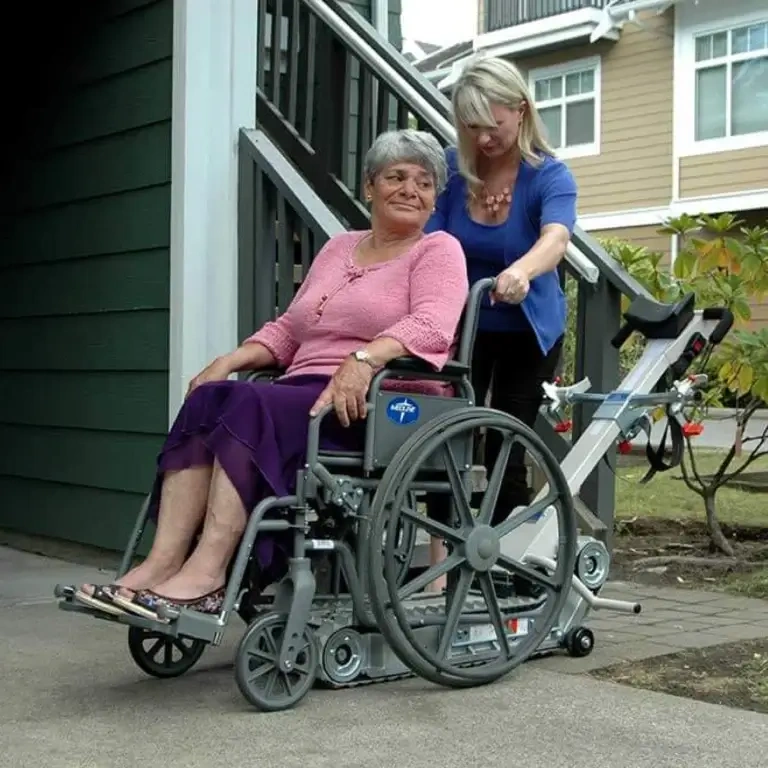
- Powered stair-climbing chairs such as the Garaventa Power-Trac can go up and down. They suit hospitals, basements, metro stations and buildings with several levels below ground.
For a full comparison, read our guide on how to choose the right evacuation chair.
How Many Evacuation Chairs Do You Need?
There is no fixed number in Indian law. Use these simple rules as a starting point:
- At least one chair per evacuation staircase.
- More chairs on floors with many people who cannot walk (wards, ICUs, elder care).
- Extra chairs for very tall buildings, so operators do not have to carry one chair up many floors.
- Review the number every year as your building and people change.
Final Thoughts | Match the Chair to the Building and the People
Evacuation chairs are no longer only for hospitals. Offices, schools, malls, metros and apartments all have people who may not manage the stairs. The right plan starts with knowing who is in your building, then placing tested chairs where they are needed and training staff to use them.
For the full picture, see our complete evacuation chair buying and safety guide.
Planning evacuation for your building? Explore Vin Grace evacuation chairs or contact us for a free site survey.
Frequently Asked Questions
Q. Where are evacuation chairs used?
Evacuation chair applications include hospitals, nursing homes, offices, IT parks, schools, colleges, hotels, malls, airports, metro stations, government buildings, factories and high-rise apartments. Any multi-storey building where someone may not be able to use the stairs needs one.
Q. How many evacuation chairs does a hospital need?
Most hospitals start with at least one chair per evacuation staircase on each floor that has patient areas, plus spares near ICUs, wards and operation theatres. The final number should come from your fire risk assessment and patient mix.
Q. Are evacuation chairs useful in offices?
Yes. Offices have staff with injuries, pregnant employees, older visitors and people with disabilities. In a fire, lifts are not used, so an evacuation chair at each stairwell lets trained fire wardens move them down safely.
Q. Can an evacuation chair go up stairs?
Manual evacuation chairs are mainly for going down. If you need to move people up, for example from a basement car park or a metro concourse, choose a powered stair-climbing evacuation chair.
Q. Do apartments need evacuation chairs?
High-rise apartments with elderly residents or people with disabilities benefit greatly from at least one chair per tower, kept at the top floor or refuge floor, with trained security staff.