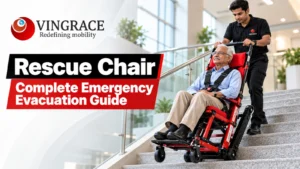
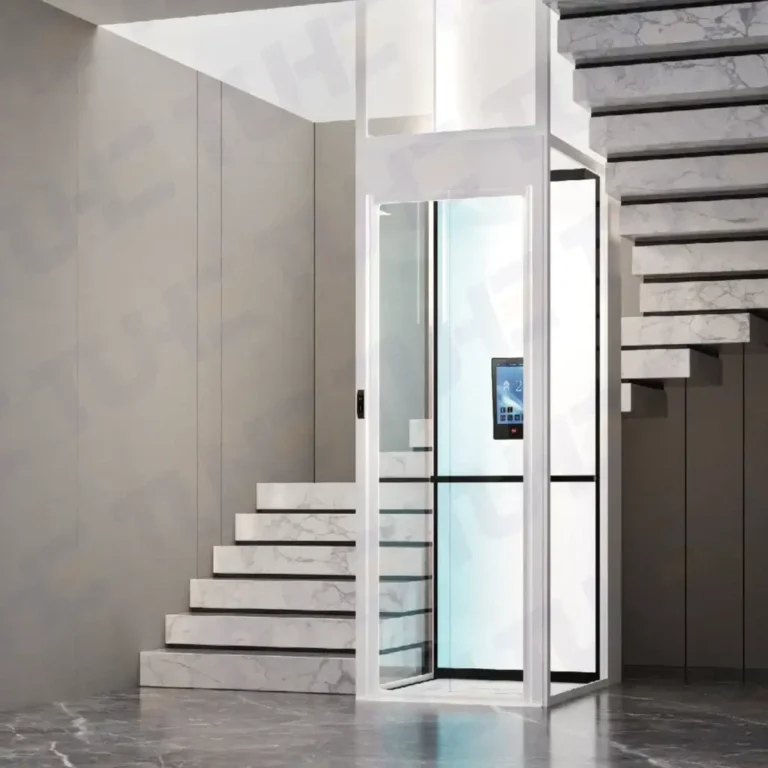
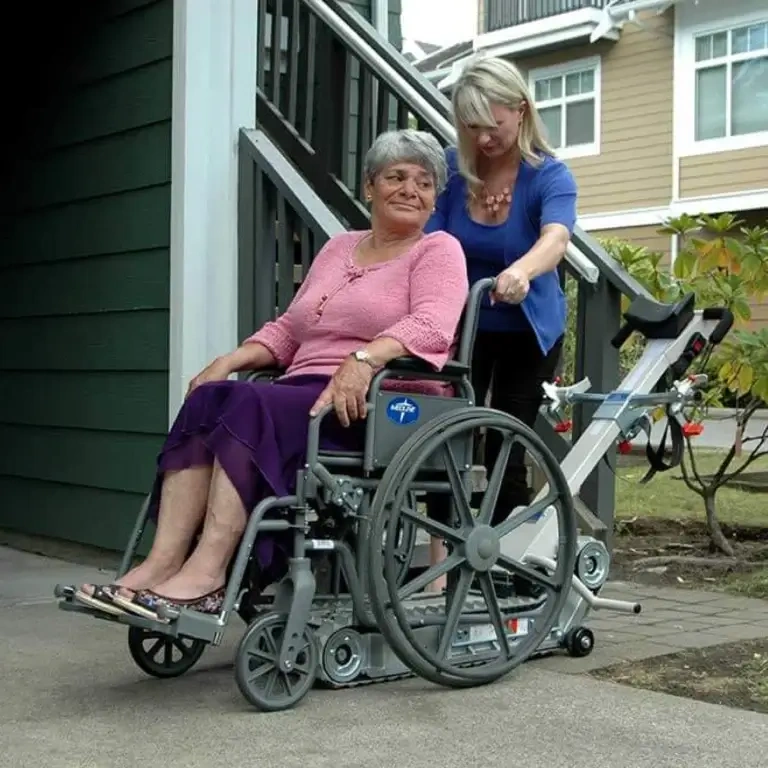
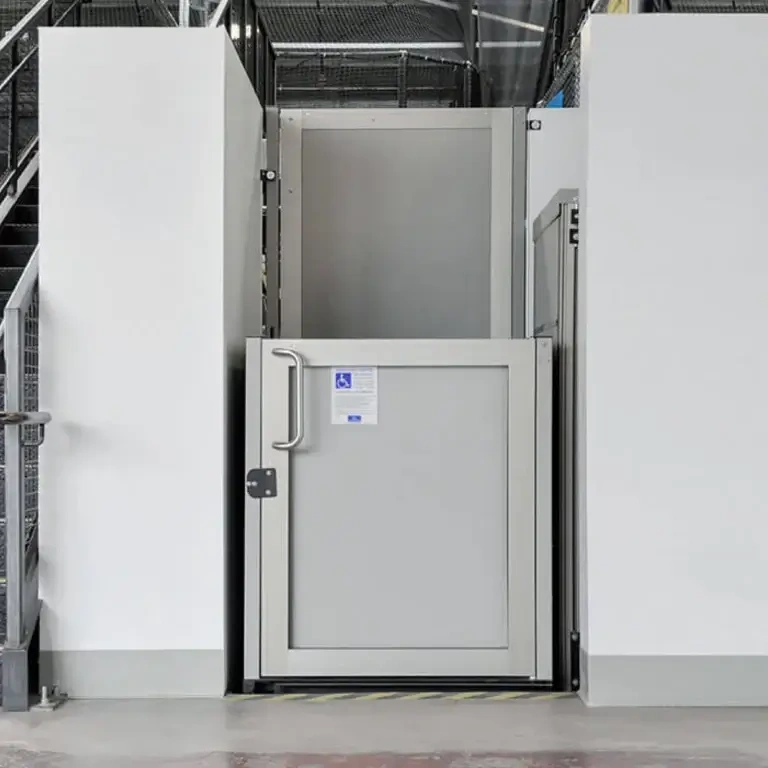
When a fire alarm goes off, most people walk to the stairs. But a patient in a ward, an elderly resident on the 12th floor or an employee with a broken leg cannot. If the lifts stop, they need someone, and something, to bring them down safely.
That something is a rescue chair. This complete guide explains what a rescue chair is, the main types, who needs one, how to choose and use it, and how to keep it ready, in simple and clear language.
Whether you run a hospital, an office, a school or simply live in a multi-storey home with elderly parents, this guide will help you make a confident, informed choice.
Quick Answer: What Is a Rescue Chair?
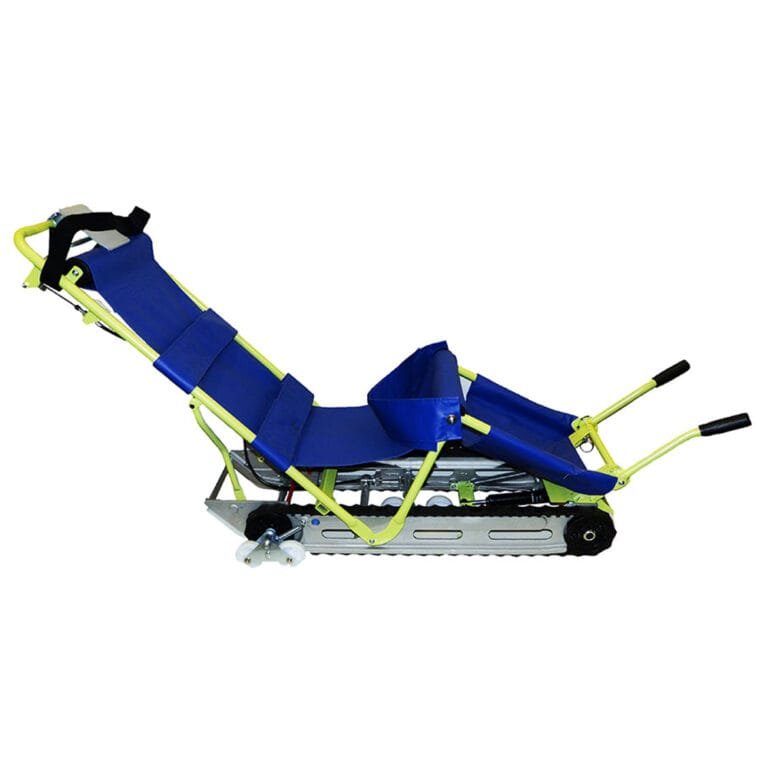
A rescue chair is a light, foldable chair used to move a person who cannot walk down (and sometimes up) stairs in an emergency, such as a fire, earthquake or power failure. It has tracks or skids that grip the stair edges, brakes to control speed, safety straps and handles for trained operators. In India, “rescue chair” and “evacuation chair” usually mean the same device. Hospitals, offices, schools, malls, hotels and high-rise homes use them to make sure no one is left behind.
Key Takeaways
- A rescue chair lets one or two trained people move a seated person safely on stairs.
- The main types are manual descent chairs, carry chairs and powered stair-climbing chairs.
- Choose by direction of travel, weight capacity, stair size and who will operate it.
- Safety depends on tested equipment, training, drills and regular maintenance.
What Is a Rescue Chair?
A rescue chair is a portable emergency device that helps move a person who cannot use the stairs on their own. The person sits in the chair, is strapped in, and a trained operator guides the chair down the stairs.
Unlike carrying someone by hand, a rescue chair:
- Takes the person’s weight on the stairs, not on the helper’s back
- Controls the speed with tracks and brakes
- Keeps the person secure with straps
- Folds flat so it can be stored near the stairs
Why rescue chairs are needed
In a fire, normal lifts should not be used. Smoke and heat can spread through lift shafts, and power can fail. That leaves stairs as the main way out. The NFPA evacuation planning guide and the UK government guide on means of escape both highlight the need for planned stair evacuation for people with disabilities.
In India, NCRB data for 2024 recorded 5,888 deaths in fire accidents (Dataful summary of NCRB data). People who cannot move quickly are among the most at risk.
Rescue Chair vs Evacuation Chair vs Stretcher
In most Indian buildings, a rescue chair and an evacuation chair are the same thing. Some people use “rescue chair” for heavier medical stair chairs used by ambulance teams. Read our full comparison of rescue chair vs evacuation chair.
| Feature | Rescue / evacuation chair | Stretcher or evacuation sledge |
|---|---|---|
| Position of person | Seated | Lying flat |
| Helpers needed | Usually 1 (manual descent) | Usually 2 to 4 |
| Speed on stairs | Fast and controlled | Slower |
| Narrow stairs and turns | Good | Can be hard |
| Best for | People who can sit up | Unconscious, spinal injury or bedridden patients |
Types of Rescue Chairs
1. Manual descent rescue chairs (track type)
These glide down stairs on rubber tracks or belts. Gravity does the work and the tracks and brakes control the speed. One trained person can operate them. They need no battery, so they are always ready. Example: the Garaventa Evacu-Trac evacuation chair.
Best for: offices, schools, hotels, malls and apartments where people exit downward.
2. Carry chairs (stair chairs)
These have wheels and carry handles. They can go up or down, but helpers must lift the chair on the stairs. They are often used by ambulance and hospital teams.
Best for: trained medical teams with two or more people.
3. Powered stair-climbing rescue chairs
These use a battery and motor to climb up and down stairs with little effort from the operator. Example: the Garaventa Power-Trac evacuation chair.
Best for: hospitals, basements, metro stations, underground car parks and buildings with levels below ground.
4. Evacuation sledges and mattresses
These are not chairs, but they are part of a full rescue plan. They let staff slide a lying patient down the stairs.
Best for: ICUs and wards with bedridden patients.
Who Needs a Rescue Chair?
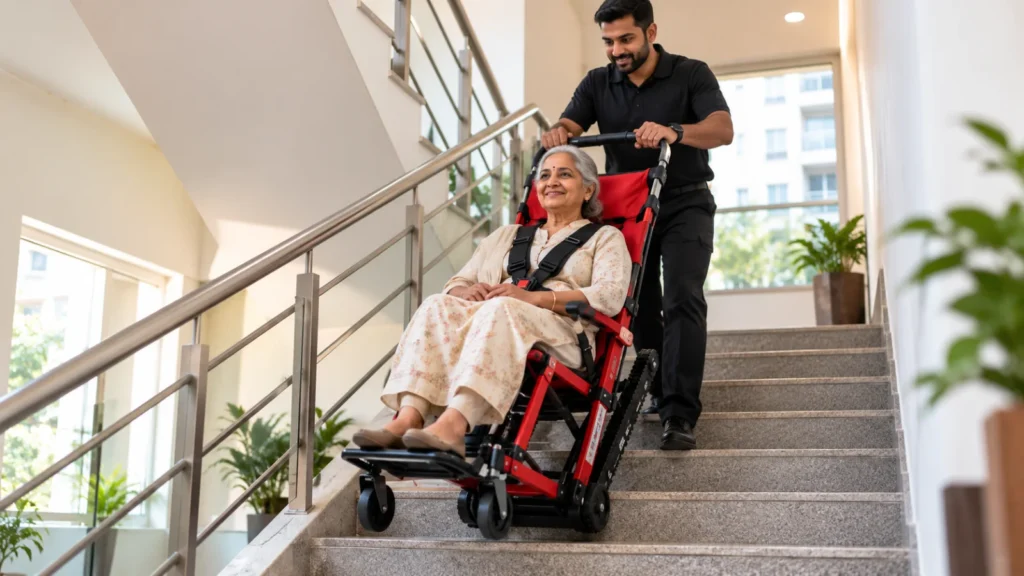
- Hospitals and nursing homes: patients after surgery, in ICUs or with limited movement
- Offices and IT parks: staff and visitors with disabilities or injuries
- Schools and colleges: students and teachers who use wheelchairs or crutches
- Hotels, malls and cinemas: elderly and disabled guests
- Airports and metro stations: passengers with reduced mobility
- Factories: workers injured on upper floors or mezzanines
- High-rise apartments and homes: elderly parents and family members with disabilities
See our detailed guide on evacuation chairs for hospitals, offices and public buildings and our article on evacuation chairs for apartments.
Key Features to Look For
- Tested load capacity: often 150 kg to 180 kg or more
- Brakes and speed control: the chair should stop safely if the operator lets go
- Strong tracks or belts: for good grip on stair edges
- Full safety straps: lap belt, chest straps and a head rest
- Light and foldable: easy to carry and store on a wall bracket
- Stair fit: works with your stair angle, width and landing size
- Easy to clean: important in hospitals
- Proven testing: such as ISO 7176-28, RESNA ED-1 or CE marking
- Warranty and local service: spare parts and trained technicians in India
How to Choose the Right Rescue Chair
Answer these five questions:
- Do you need to go down only, or also up? Down only: manual chair. Up and down: powered chair.
- Who is the heaviest person you may need to move? Pick a chair rated above that weight.
- How wide are your stairs and landings? Measure, and ask for a demo on your own stairs.
- Who will operate it? Choose a chair your staff can learn and use easily.
- How many do you need? Start with one per evacuation staircase and add more for hospitals and tall buildings.
For a deeper walk-through, read how to choose the right evacuation chair and our complete evacuation chair buying and safety guide.
How to Use a Rescue Chair (Simple Steps)
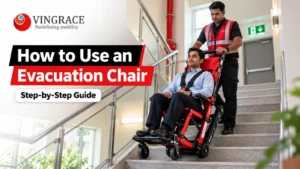
- Bring the chair to the stair landing and unfold it until it locks.
- Help the person sit and fasten all straps.
- Tilt the chair back and roll it to the top step.
- Let the tracks rest on the stair edges and walk down slowly behind it, holding the handle with both hands.
- Turn on flat landings using the rear wheels.
- Roll the person to the exit or assembly point and hand over safely.
Only trained people should do this. For full details and do’s and don’ts, read how to use an evacuation chair during emergencies.
Safety Standards and Rules in India
There is no single Indian law that tells every building to buy a rescue chair. But several rules together expect safe escape for everyone:
- RPwD Act 2016: Section 8 gives persons with disabilities equal protection in emergencies (read the Act).
- National Building Construction Standards 2026: replaced NBC 2016 in April 2026; fire and life safety is now in Part F, applied through state and local bye-laws.
- State fire service rules: decide fire NOCs and fire safety audits.
- NABH (for hospitals): the 6th edition standards cover fire and non-fire emergency plans.
Learn more in our guide on evacuation chair safety standards and compliance in India.
Maintenance and Storage
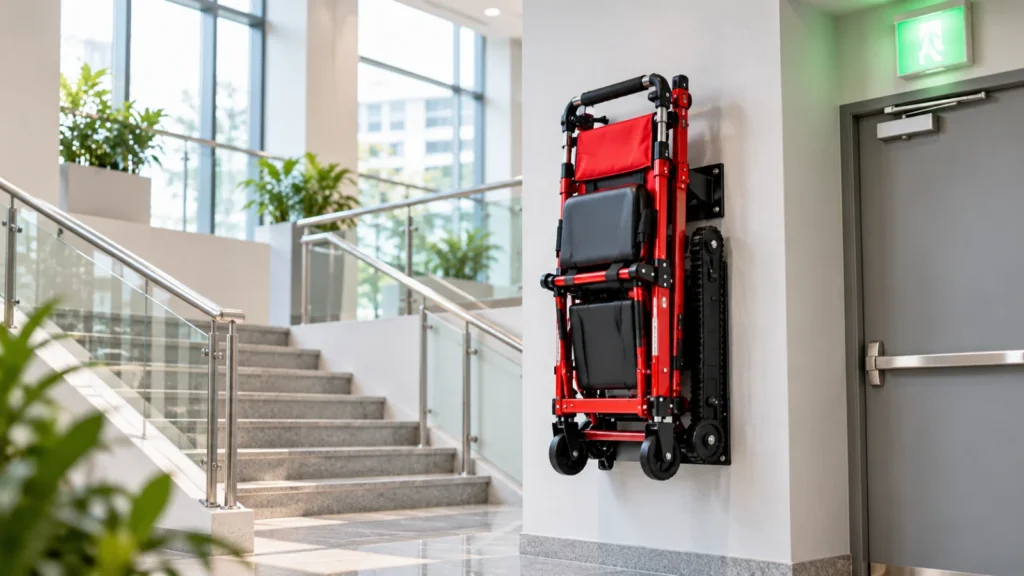
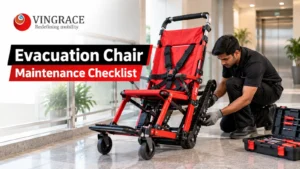
- Monthly: visual check of frame, tracks, straps and wheels
- Every 3 months: open, test brakes and clean
- Every year: full service by a trained technician
- Always: store near the stairs, in a cover or cabinet, with clear signs
Use our printable evacuation chair maintenance checklist to keep track.
Common Mistakes to Avoid
- Keeping the chair locked in a store room far from the stairs
- Training only one person, or never practising
- Buying a descent-only chair when you need to move people up from a basement
- Ignoring the weight limit
- Skipping the yearly service
Final Thoughts | A Rescue Chair Is Part of a Complete Plan
A rescue chair gives people who cannot walk a safe way down the stairs when it matters most. But the chair is only one part. You also need a written plan, trained operators, regular drills and simple monthly checks. Put these together and your building is ready for the day no one hopes for.
Looking for a rescue chair for your building or home? Explore Vin Grace evacuation and rescue chairs, browse all our mobility products, or contact us for a free site survey and demo.
Frequently Asked Questions
Q. What is a rescue chair?
A rescue chair is a portable, foldable chair used to move a person who cannot walk safely down (and sometimes up) stairs during an emergency. In India the term is often used for the same device as an evacuation chair. It usually has tracks or skids, brakes, safety straps and handles for one or two trained operators.
Q. What is the difference between a rescue chair and an evacuation chair?
In most Indian buildings there is little difference, and suppliers use both names. Some people use ‘rescue chair’ for heavier-duty or medical stair chairs used by ambulance and hospital teams, and ‘evacuation chair’ for chairs kept in buildings for fire escape.
Q. Who needs a rescue chair?
Hospitals, nursing homes, offices, schools, hotels, malls, metro stations, factories, high-rise apartments and families with elderly or disabled members in multi-storey homes all benefit from having a rescue chair.
Q. Can one person operate a rescue chair?
Most manual track-type rescue chairs are designed for one trained operator going down stairs. Carry-type chairs and some powered models need two people. Always follow the maker’s instructions.
Q. What weight can a rescue chair carry?
Many rescue chairs are rated for around 150 kg to 180 kg, and some heavy-duty models carry more. Always check the tested load rating against the heaviest person you may need to move.
Q. Is a rescue chair better than a stretcher on stairs?
For people who can sit up, a rescue chair is usually faster and needs fewer helpers on narrow stairs. For people who must lie flat, such as those with spinal injuries or who are unconscious, a stretcher, evacuation sledge or mattress is safer.
Q. How do I maintain a rescue chair?
Do a monthly visual check, a quarterly function check and a yearly service by a trained technician. Keep records of every check and replace worn straps, tracks or batteries quickly.