India’s population is ageing faster than ever before. By 2026, more than 150 million Indians are aged 60 and above, and this number is expected to exceed 230 million by 2036.
As families in Delhi, Mumbai, Bengaluru, Hyderabad, Chennai, Kolkata, Pune, Ahmedabad, and emerging cities look for safer ways to support ageing parents and grandparents, choosing the right mobility solution has become a necessity—not a luxury.
Age-related conditions such as arthritis, osteoporosis, Parkinson’s disease, muscle weakness, stroke recovery, and balance disorders can significantly reduce mobility and independence.
Everyday tasks like climbing stairs, walking to the bathroom, or visiting a nearby park may become challenging. Without the right support, the risk of falls, injuries, and hospitalisation increases dramatically.
At Vin Grace, we believe every senior deserves to live with dignity, confidence, and freedom. This comprehensive guide explains the best mobility solutions for elderly people in India, their latest 2026 prices, government support schemes, and expert tips to help families make informed decisions.
Why Mobility Support Is Becoming Essential for Indian Seniors
Growing older shouldn’t mean giving up independence. However, many seniors experience physical limitations that affect their daily lives. Some of the most common mobility challenges among elderly people in India include:
Arthritis and Joint Pain
Arthritis is one of the leading causes of reduced mobility. Joint stiffness, pain, and swelling make walking, standing, and climbing stairs increasingly difficult.
Osteoporosis
Weakened bones increase the likelihood of fractures, causing many seniors to develop a fear of walking without support.
Muscle Weakness (Sarcopenia)
Age-related muscle loss affects balance, stability, and overall strength, making even short walks exhausting.
Neurological Disorders
Conditions such as Parkinson’s disease, stroke recovery, multiple sclerosis, and other neurological disorders often require specialised mobility equipment.
Heart and Respiratory Conditions
Reduced stamina caused by cardiovascular or respiratory illnesses limits mobility and increases fatigue during routine activities.
Challenges in Indian Homes
Many Indian homes were never designed for ageing residents. Families often struggle with:
- Narrow staircases
- Multi-storey homes without lifts
- Uneven footpaths
- Slippery bathrooms
- High door thresholds
- Limited wheelchair accessibility
Investing in the right mobility aid early can prevent falls, reduce dependence on caregivers, and significantly improve overall quality of life.
Types of Mobility Solutions for Elderly in India
Every senior has different mobility needs. The ideal solution depends on medical condition, lifestyle, home layout, and budget.
1. Walking Aids
Walking aids remain the most affordable and widely used mobility support devices in India.
Walking Canes
Walking canes provide basic support for seniors with mild balance issues or occasional joint pain.
Available options include:
- Single-point canes
- Quad canes
- Adjustable-height canes
- Ergonomic handle canes
Best for: Mild arthritis, early mobility concerns, post-surgery support
Estimated Price (2026): ₹1,500–₹4,000
Walkers
Walkers offer greater stability than canes and are ideal for seniors who require continuous support while walking.
Popular options include:
- Standard folding walkers
- Reciprocal walkers
- Wheeled walkers
- Rollators
Best for: Balance disorders, knee replacement recovery, weak leg muscles
Estimated Price (2026): ₹2,500–₹8,000
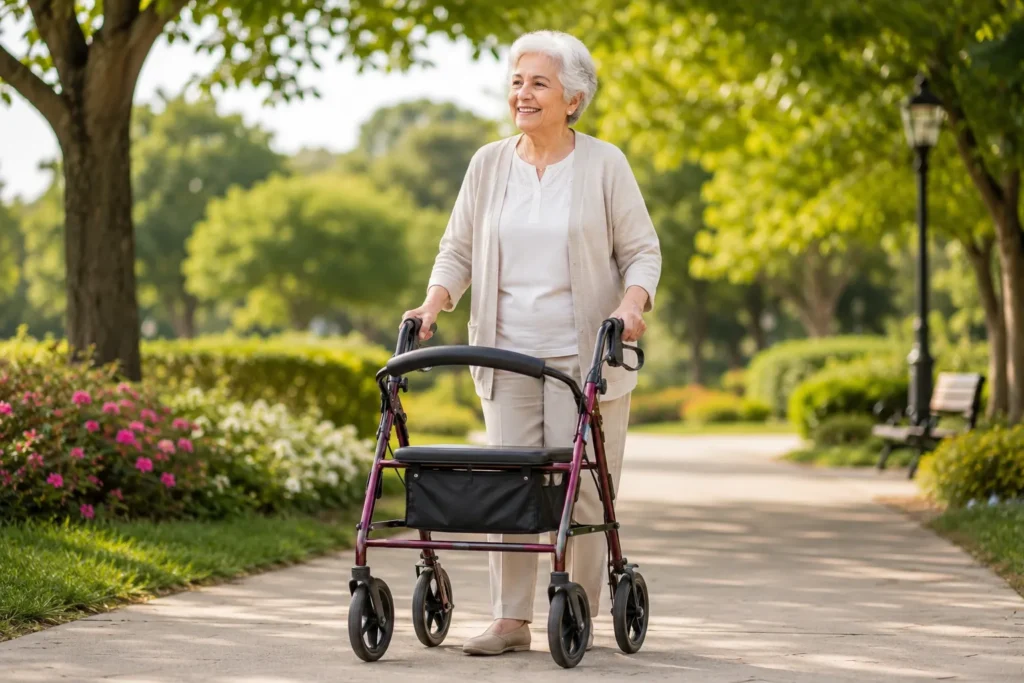
Rollators
Rollators feature wheels, brakes, storage baskets, and built-in seats, making them ideal for active seniors who enjoy walking outdoors.
Best for: Independent seniors, daily outdoor walks, shopping trips, parks and community spaces
Estimated Price (2026): ₹5,000–₹12,000
2. Wheelchairs
Wheelchairs provide greater mobility for seniors who find walking difficult or impossible.
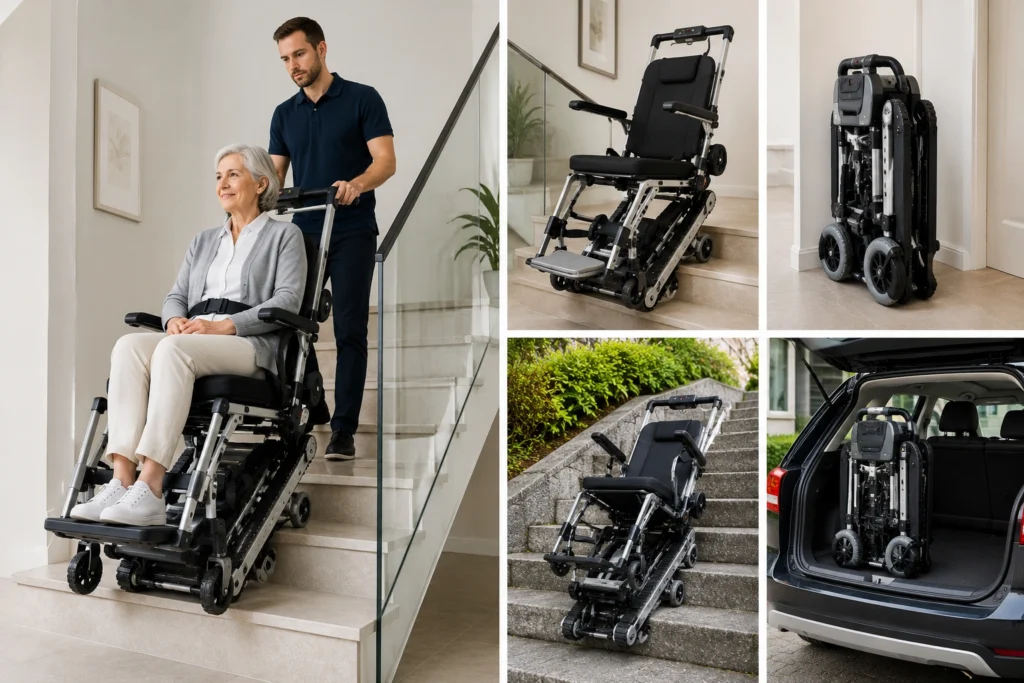
Manual Wheelchairs
Lightweight folding wheelchairs remain the preferred choice for home use, hospitals, and travel.
Suitable for: Stroke recovery, long-term mobility support, temporary injuries
Price: ₹5,000–₹25,000
Electric (Power) Wheelchairs
Power wheelchairs allow seniors to move independently using joystick controls, reducing dependence on caregivers. Modern models offer rechargeable batteries, foldable designs, comfortable seating, and long travel range.
Suitable for: Severe mobility limitations, neurological conditions, limited upper-body strength
Price: ₹45,000–₹1,50,000+
Transport Chairs
These lightweight chairs are designed for travel and are pushed by caregivers.
Best for: Airport travel, hospital visits, short-distance transportation
Price: ₹6,000–₹18,000
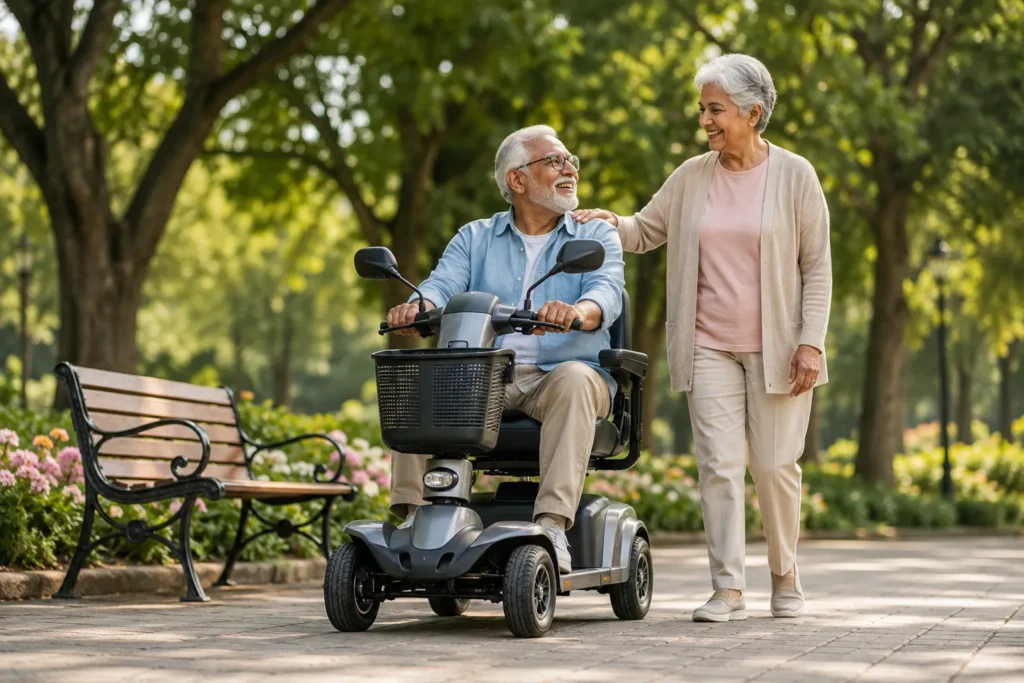
3. Mobility Scooters
Mobility scooters are becoming increasingly popular among active senior citizens who can sit comfortably but struggle with long-distance walking. Available options include portable foldable scooters, three-wheel scooters, four-wheel outdoor scooters, and heavy-duty models.
Ideal for: Shopping malls, parks, residential communities, large campuses
Estimated Price (2026): ₹35,000–₹1,20,000
4. Stair Lifts and Home Elevators
For families living in duplexes, villas, or multi-storey homes, stairs often become the biggest obstacle to independent living. Installing a stair lift or home lift can completely transform a senior’s daily life.
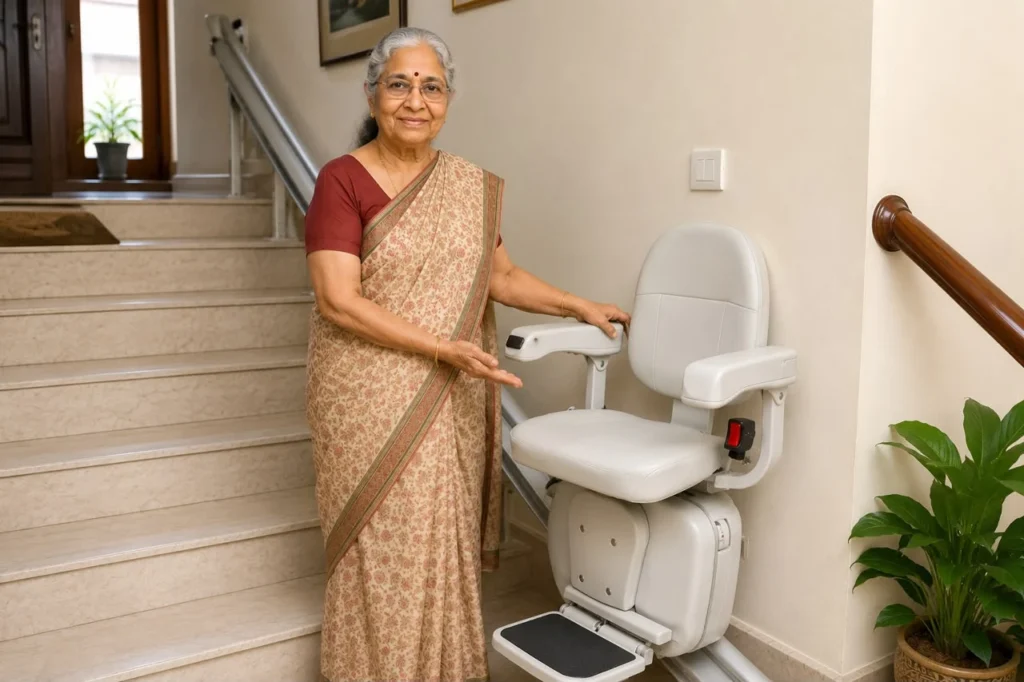
Stair Lifts
A stair lift consists of a comfortable motorised chair that moves safely along a rail installed on the staircase.
Suitable for: Knee arthritis, hip replacement recovery, seniors with balance issues, Parkinson’s patients
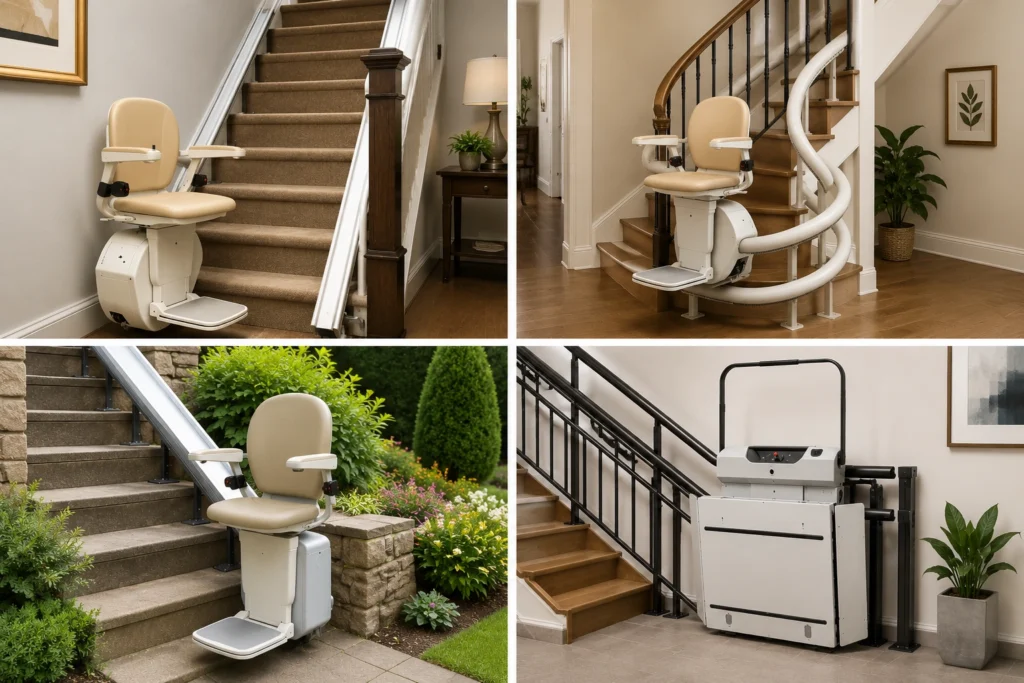
| Type | Approximate Price |
|---|---|
| Straight Stair Lift | ₹1.20 lakh – ₹3 lakh |
| Curved Stair Lift | ₹4.5 lakh onwards |
Home Lifts
Residential elevators provide full accessibility between floors without requiring seniors to use stairs. Home lifts are becoming increasingly popular in Delhi NCR, Mumbai, Bengaluru, Hyderabad, Chennai, and Pune.
Estimated Price (2026): ₹5 lakh–₹15 lakh+
Ideal for: Villas, duplex homes, luxury apartments, independent houses
5. Essential Home Safety & Mobility Accessories
Small upgrades can significantly improve safety and independence. Recommended accessories include:
- Grab bars
- Raised toilet seats
- Shower chairs
- Anti-slip mats
- Transfer boards
- Patient hoists
- Bed rails
- Smart fall-detection wearables
Mobility Solutions Comparison (2026)
| Mobility Solution | Best For | Independence | Approx. Price | Maintenance |
|---|---|---|---|---|
| Walker / Rollator | Mild mobility issues | High | ₹3,000–₹12,000 | Low |
| Manual Wheelchair | Moderate limitations | Medium | ₹8,000–₹25,000 | Low |
| Power Wheelchair | Severe mobility challenges | High | ₹50,000–₹1.5 lakh | Medium |
| Mobility Scooter | Outdoor mobility | High | ₹40,000–₹1.2 lakh | Medium |
| Stair Lift | Multi-storey homes | Very High | ₹1.2–₹6 lakh | Low |
| Home Lift | Complete home accessibility | Highest | ₹5–₹15 lakh+ | Low |
Government Schemes for Senior Mobility Support (2026)
Several government initiatives help eligible families access mobility aids at subsidised or no cost.
Rashtriya Vayoshri Yojana (RVY)
Provides free assistive devices such as wheelchairs, walkers, walking sticks, and hearing aids for eligible senior citizens from economically weaker sections.
ADIP Scheme
Offers financial assistance for assistive devices to persons with benchmark disabilities, including eligible elderly individuals.
State-Level Assistance
Many states, including Delhi, Kerala, Tamil Nadu, Maharashtra, and Karnataka, offer additional subsidies or welfare programmes for senior citizens.
Before purchasing mobility equipment, families should check with their District Social Welfare Department for current eligibility and available benefits.
How to Choose the Right Mobility Solution
Choosing the right mobility equipment involves more than comparing prices. Consider the following checklist:
Get a Professional Assessment
Consult an orthopaedic specialist, geriatrician, or physiotherapist to understand the senior’s specific mobility needs.
Evaluate Your Home
Measure door widths, staircase dimensions, floor space, and bathroom accessibility. This ensures the equipment fits comfortably within the home.
Prioritise Comfort and Independence
The best mobility solution is one that seniors feel confident using every day.
Consider Long-Term Costs
Look beyond the purchase price. Evaluate warranty, annual maintenance, battery replacement, service availability, and spare parts.
Request a Product Demonstration
Whenever possible, arrange a trial before making a final decision.
Check Safety Features
Essential safety features include anti-tip wheels, reliable braking systems, safety harnesses, emergency stop functions, and battery backup for powered equipment.
Why Families Across India Trust Vin Grace
At Vin Grace, we specialise in thoughtfully designed mobility solutions built for Indian homes, lifestyles, and accessibility needs. Our solutions include premium stair lifts, residential home lifts, manual and electric wheelchairs, walkers and rollators, mobility scooters, and home accessibility products.
Why choose Vin Grace?
- Expert consultation and personalised recommendations
- Site surveys and customised installations
- Reliable after-sales support
- Service coverage across Delhi NCR, Mumbai, Bengaluru, Hyderabad, Chennai, Kolkata, Pune, and other major cities
- Transparent pricing with EMI options
- High-quality products focused on safety, comfort, and durability
Thousands of Indian families trust Vin Grace to help their loved ones enjoy greater independence and peace of mind.
Mobility Equipment Maintenance Tips
Proper maintenance extends the life of mobility devices and ensures user safety. Follow these best practices:
- Schedule regular servicing for powered equipment.
- Keep batteries fully charged and replace them when needed.
- Clean wheelchair wheels, scooter tyres, and stair lift tracks regularly.
- Train caregivers and family members on safe operation.
- Continue physiotherapy to maintain strength and balance.
- Improve home safety with grab bars, ramps, adequate lighting, and non-slip flooring.
Conclusion
Mobility is about far more than getting from one place to another-it is about preserving independence, confidence, and quality of life. With the right mobility solution, seniors can continue enjoying everyday activities while reducing the risk of falls and unnecessary dependence.
Whether your loved one needs a simple walker, a power wheelchair, a mobility scooter, or a customised stair lift, investing in the right solution today can make a lasting difference tomorrow.
At Vin Grace, we’re committed to helping Indian families create safer, more accessible homes through reliable mobility solutions backed by expert guidance and dependable after-sales support.
Take the first step toward a safer, more independent future. Contact Vin Grace today for a personalised consultation and discover the ideal mobility solution for your loved ones.
Frequently Asked Questions (FAQs)
Q. Which mobility aid is best for elderly people with arthritis?
Walkers, rollators, and stair lifts are excellent options for seniors with arthritis, depending on the severity of joint pain and mobility limitations.
Q. What is the average cost of a stair lift in India?
In 2026, a straight stair lift typically costs between ₹1.2 lakh and ₹3 lakh, while curved stair lifts generally start from ₹4.5 lakh, depending on the staircase design and customisation.
Q. Are electric wheelchairs worth buying?
Yes. Electric wheelchairs provide greater independence for seniors with severe mobility challenges, especially those with limited upper-body strength or neurological conditions.
Q. Does the Indian government provide free mobility aids?
Eligible beneficiaries may receive assistive devices through schemes such as the Rashtriya Vayoshri Yojana (RVY), the ADIP Scheme, and various state welfare programmes.
Q. Which mobility solution is best for homes with stairs?
For multi-storey homes, stair lifts and home lifts offer the safest and most convenient long-term accessibility solution.