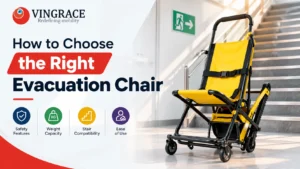
Stairs are one of the most common barriers that people with mobility challenges face every day. A single flight of steps can turn a simple visit to a friend’s home, a doctor’s appointment, or even a trip to the local market into a stressful ordeal.
For millions of wheelchair users, seniors, and people recovering from surgery or injury, stairs without a ramp or elevator often mean depending on someone else just to get from one floor to another.
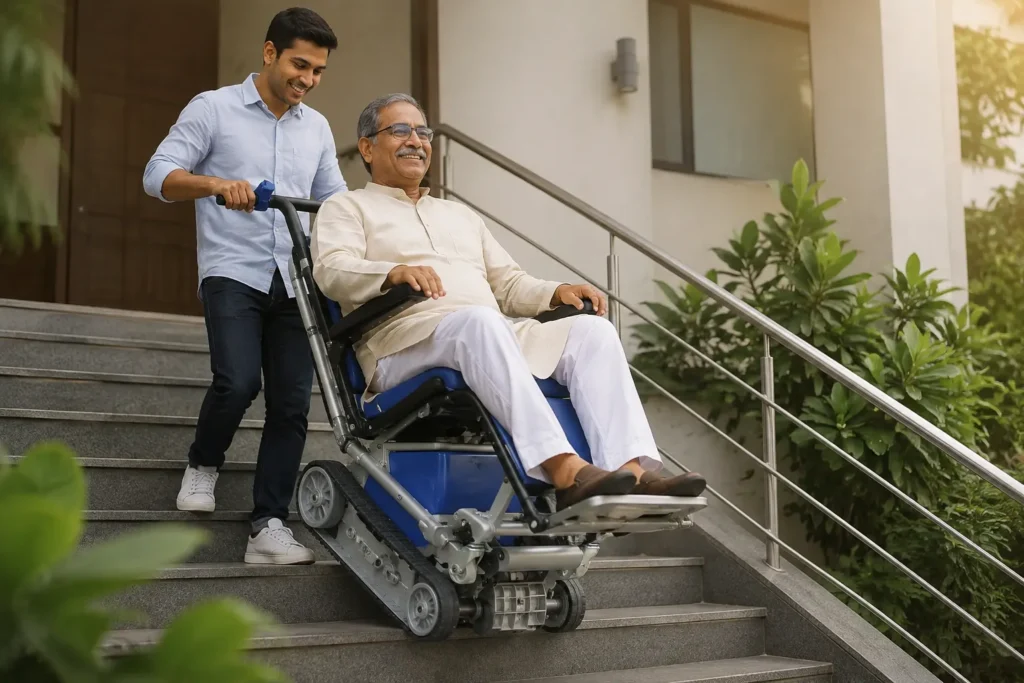
This is exactly the gap that stair climbing wheelchairs are designed to close. Unlike a fixed stairlift that only works on one staircase, a stair climbing wheelchair is a portable device that can carry a person safely up and down almost any set of steps, indoors or outdoors. Today we will look at how stair climbing wheelchairs work, why they matter for accessibility, and what to consider before choosing one.
What Is a Stair Climbing Wheelchair? | Understanding the Basics
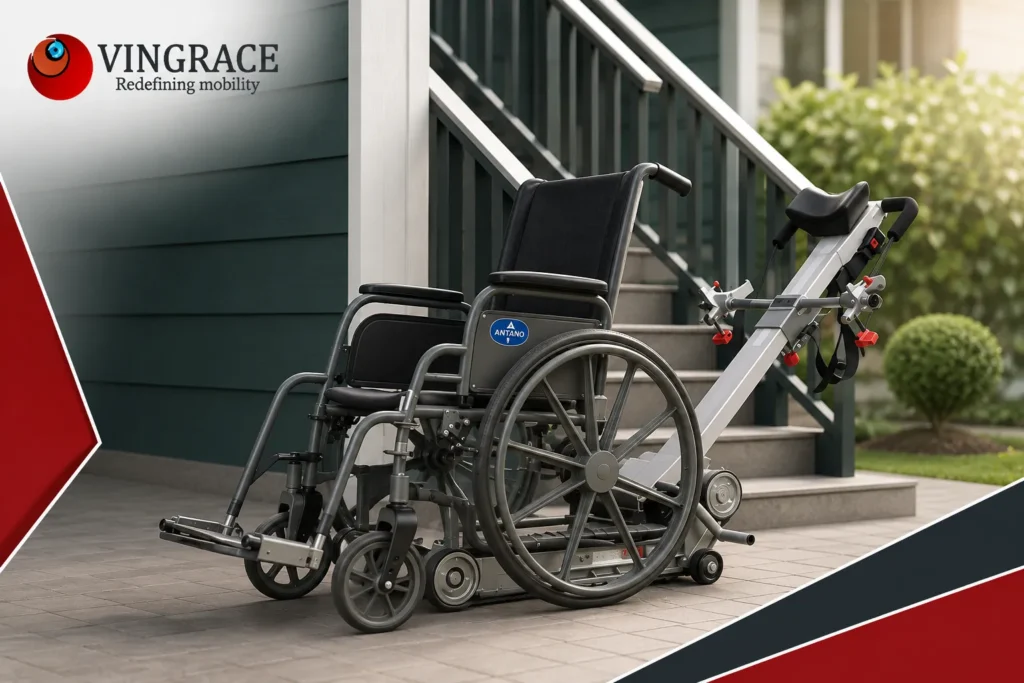
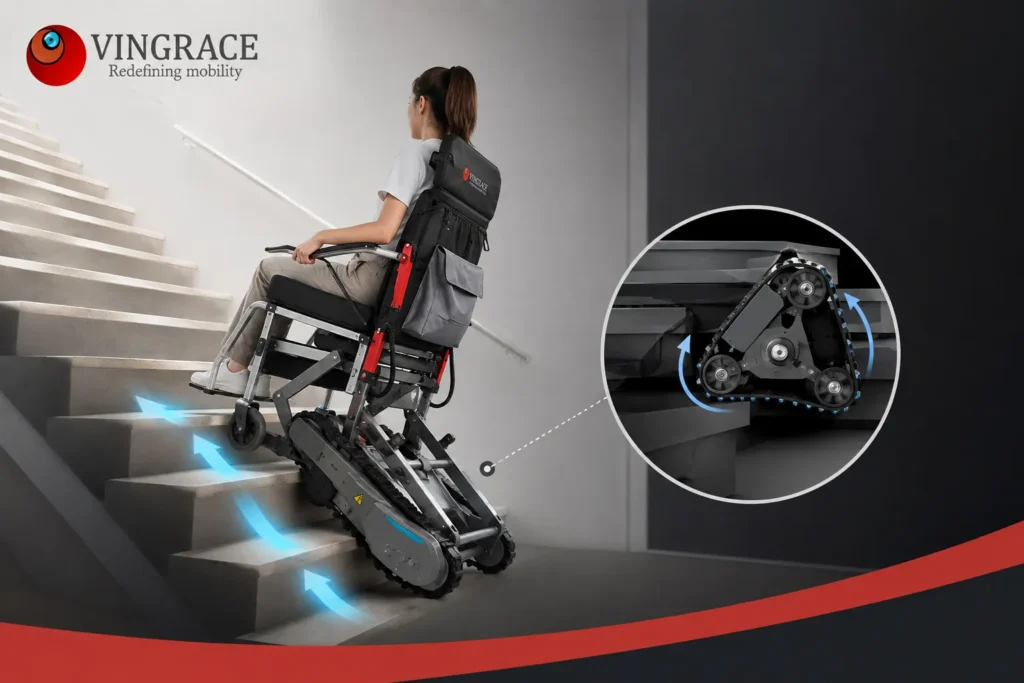
A stair climbing wheelchair, sometimes called a stair climber or portable stair lift, is a battery-powered or manually operated device that uses tracks, rotating wheel clusters, or a tank-like tread system to move a wheelchair user up and down staircases.
Unlike home elevators or fixed stairlifts, it does not require permanent installation, which makes it a flexible mobility aid (LSI: assistive device) for homes, offices, schools, and public buildings.
Most models allow either the user or a trained attendant to control speed and direction using a joystick or handgrip switches. Vin Grace offers a detailed breakdown of how these systems work and the safety features built into each model on their stair climbing wheelchairs page, including anti-slip tracks and safety harnesses.
How Stair Climbing Wheelchairs Improve Accessibility
Physical barriers like stairs remain one of the biggest obstacles to inclusion for people with disabilities. According to the U.S. Centers for Disease Control and Prevention (CDC), physical barriers such as steps and curbs are a leading reason people with mobility impairments cannot enter or move freely through a building. This is where stair-climbing wheelchairs make a real difference.
Here is how they improve daily accessibility:
- Independence from caregivers: Users no longer need to be physically carried or lifted up staircases, reducing strain on both the user and family members.
- Access to older buildings: Many heritage buildings, small offices, and older homes were never built with ramps or elevators. A stair-climbing wheelchair provides access without any structural changes.
- Lower cost than construction: Installing an elevator or ramp can involve major renovation and cost. A portable stair climber avoids that expense while still solving the problem.
- Emergency evacuation support: Some models double as evacuation chairs, helping move a person safely down stairs during a power outage or fire emergency.
Vin Grace explains several of these real-world benefits in more depth on their page about exploring the benefits of stair climbing wheelchairs.
Why Mobility Independence Matters | The Bigger Picture
Mobility disability is not a rare or minor issue. Data from the CDC shows that difficulty walking or climbing stairs is one of the most commonly reported disability types among adults in the United States, and it becomes far more common with age.
The World Health Organization (WHO) has also reported that billions of people worldwide need some form of assistive technology, including mobility aids, yet access remains very unequal between countries.
This is why stair climbing wheelchairs are increasingly seen not as a luxury item, but as a practical tool for dignity and independence (LSI: independent living, quality of life). When someone can move between floors on their own schedule, they are more likely to keep working, socializing, and managing their own healthcare appointments without depending on others.
Where Stair Climbing Wheelchairs Are Commonly Used
- Homes: Multi-story houses where building a ramp or elevator is not practical.
- Workplaces and schools: Helping staff, students, or visitors access every floor.
- Hospitals and clinics: Moving patients with temporary or long-term mobility limits.
- Public buildings and heritage sites: Older structures where permanent ramps may not be allowed due to preservation rules.
- Events and travel: Weddings, exhibitions, or short-term visits where a fixed stairlift is not an option.
Vin Grace’s product range page lists different categories of mobility equipment, including climbing wheelchairs designed for both home and commercial use.
Manual vs Automatic Stair Climbing Wheelchairs
Choosing between a manual and an automatic (battery-powered) stair climbing wheelchair depends on the user’s needs, budget, and how often the device will be used.
- Manual models are lighter, more affordable, and depend on an attendant to guide the chair. They work well for occasional or short-term use.
- Automatic models use a motor and battery to handle the climbing motion, which reduces physical effort for the attendant and works better for daily use or steeper staircases.
For example, Vin Grace’s page on the Liftkar Sano PT S stair climbing wheelchair explains how a quick-change battery pack supports a few hundred steps per charge, along with adjustable speed settings for smoother control.
Key Features to Look for Before Buying
When comparing stair climbing wheelchairs, keep these points in mind:
- Weight capacity – Confirm the model can safely support the user’s weight.
- Stair compatibility – Check whether the chair works on straight, curved, steep, or narrow stairs.
- Battery life – For automatic models, ask how many steps or floors it can handle on one charge.
- Portability – A foldable, lightweight design is easier to store and transport.
- Safety features – Look for anti-slip tracks, safety belts, and emergency stop controls.
Vin Grace’s Garaventa Stair Trac is one example of a model built to work on a wide range of stair angles while remaining portable enough to fold and store in a car.
Accessibility Standards and Legal Context
In many countries, accessibility in public buildings is guided by formal design standards. In the United States, the Americans with Disabilities Act (ADA) sets out detailed requirements for accessible routes, ramps, and lifts in public and commercial spaces.
While the ADA mainly addresses fixed infrastructure, it recognizes platform lifts as an acceptable alternative to a fixed elevator in certain situations, which is part of why portable solutions like stair-climbing wheelchairs have become so widely adopted alongside ramps and lifts.
Understanding these standards helps families, building owners, and caregivers make informed choices about which mobility aid best fits a specific staircase or building layout.
Final Thoughts
Stairs should never be the reason someone is cut off from their home, workplace, or community. Stair climbing wheelchairs offer a practical, affordable, and often life-changing alternative to expensive construction work, giving people back a sense of control over their own mobility.
Whether it is for daily home use, workplace access, or short-term recovery after an injury, choosing the right stair climbing wheelchair can make an enormous difference in someone’s independence and quality of life.
If you are exploring options for yourself or a loved one, browsing a few different models and comparing weight limits, battery life, and safety features is a good place to start before making a decision.
Sources / References
- CDC — Disability Barriers to Inclusion
- CDC — Disability and Health Data Now
- ADA.gov — 2010 ADA Standards for Accessible Design
- World Health Organization — Assistive Technology Fact Sheet
- U.S. Access Board — ADA Accessibility Standards