More Indian families are choosing home elevators over stairs – for ageing parents, for daily convenience, and for a bit of everyday luxury. But with so many brands claiming to be “the best,” picking the right one can feel confusing.
This guide compares Vin Grace and five other well-known home elevator companies in India: Nibav Lifts, Elite Elevators, Swift Lifts, KONE, and Otis.
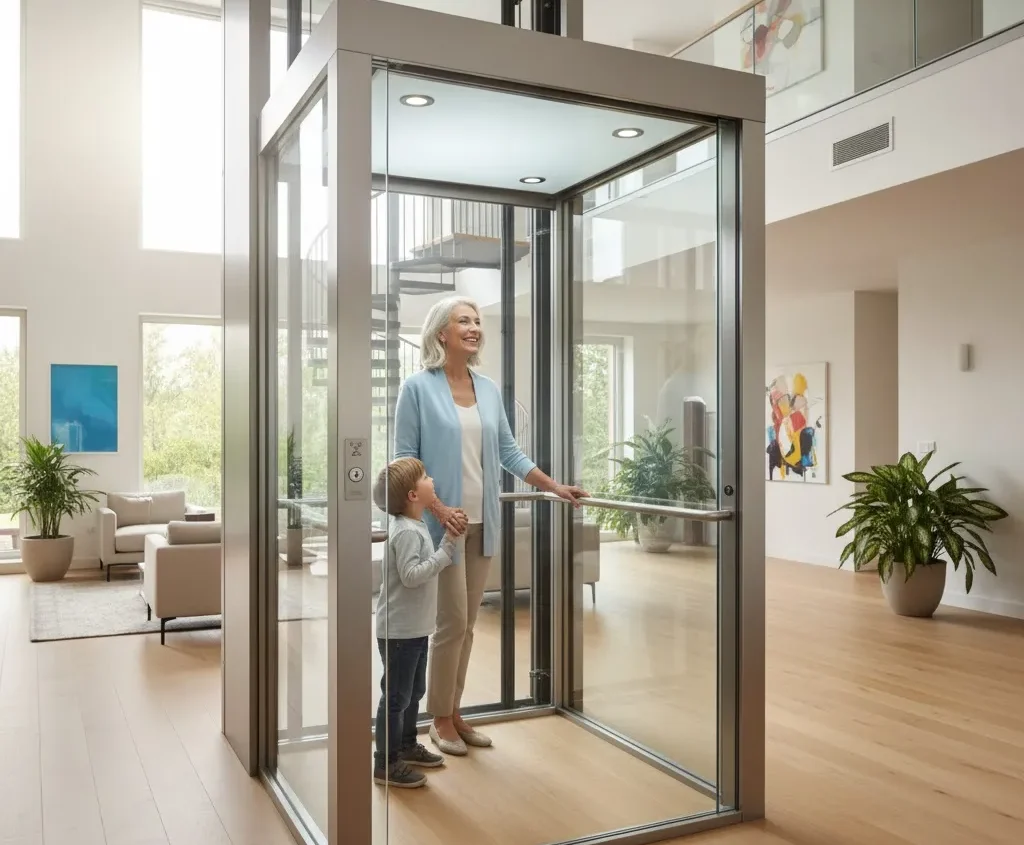
We consider pricing, technology, safety rules, installation time, and after-sales service so you can make a confident, well-informed decision. This is a buyer’s guide first – every brand here has a genuine strength, and we point out trade-offs too, not just pros.
Quick answer:
There’s no one “best” home elevator brand in India. The right choice depends on your budget, shaft space, and city. Vin Grace is a great choice for buyers seeking an affordable entry price. It provides quick setup and a variety of products. You can find home lifts, stairlifts, and wheelchair lifts – all in one spot.
Nibav Lifts and Elite Elevators are famous for their vacuum and premium residential elevators. KONE and Otis are global names with a long track record, mainly aimed at larger or premium projects.
Note: Prices, installation times, and product specs change frequently. They also vary by city, home layout, and customization. Use the figures below as rough starting points, not final quotes. Always check current pricing and certification with each company after a site survey.
Big Update for 2026 | The Safety Rulebook Changed
Before comparing brands, it helps to know one important regulatory change. Starting December 22, 2025, IS 17900 will be the mandatory lift safety code in India. This code comes from the Bureau of Indian Standards and applies to all new lift installations.
It replaces the older codes: IS 14665, IS 15785, and IS 14671. IS 17900 follows European safety standards EN 81-20 and EN 81-50. It includes requirements like door interlocks, protection against unintended car movement, overspeed governors, and safety gear.
What this means for you as a buyer: any home elevator set up in India after late 2025 has to meet IS 17900 standards. Don’t rely on older standards you might find in some brochures. When you request certification proof, be clear. Ask about IS 17900 compliance. Don’t just say “ISI” or “BIS approved.”
You can read the official standard details on the Bureau of Indian Standards (BIS) website, and independent, third-party inspection bodies such as TÜV SÜD India also publish plain-language explainers on what IS 17900 requires.
How We Compared These Companies
Instead of ranking brands purely on name recall, we compared each company on eight practical, buyer-focused factors:
- Starting price and EMI options
- Installation time and civil work required
- Technology type (hydraulic, vacuum/pneumatic, screw-drive, MRL, traction)
- Safety certification (IS 17900, EN 81, ISO 9001)
- Service network across Indian cities
- Warranty and AMC (Annual Maintenance Contract) terms
- Customisation options (cabin finish, glass panels, capacity)
- Overall reputation and years of operating experience
Quick Comparison Table of Top Home Elevator Manufacturing Companies in India
| Brand | Known For | Typical Technology | Pit/Shaft Needed? | Best For |
|---|---|---|---|---|
| Vin Grace | Affordable pricing, fast install, wide product range | Hydraulic, MRL, stairlifts | Not needed for compact models | Value + speed + elderly mobility needs |
| Nibav Lifts | Vacuum/pneumatic home lifts | Vacuum/Pneumatic | No | Design-forward retrofits, no-shaft homes |
| Elite Elevators | Premium, European-style finishes | Hydraulic, Gearless | Some models need it | Luxury villas and bungalows |
| Swift Lifts | Battery-driven, energy-efficient lifts | Battery-driven MRL | Not needed for compact model | Energy efficiency, compact footprint |
| KONE | Global engineering, smart-home integration | MRL, Traction | Usually yes for larger units | Large homes, apartment complexes |
| Otis | Long operating history, modernization expertise | Traction, Hydraulic | Usually yes | Brand heritage and long-term reliability |
Note: This table reflects each company’s general market positioning, not a ranking. Always confirm current pricing directly with the company.
1. Vin Grace – Affordable, Fast, and a Wide Product Range
Website: vingrace.com | Headquarters: Delhi, India | Coverage: Multiple Indian cities
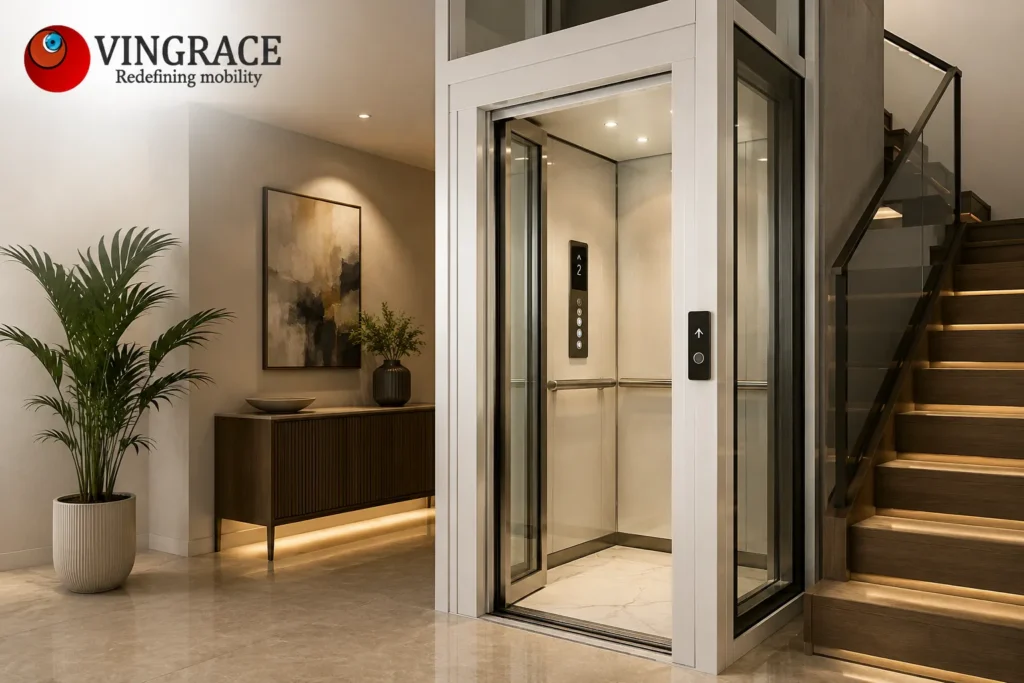
Vin Grace has become a familiar name for home lifts and stairlifts in India, mainly because it addresses the two biggest hesitations homeowners have: cost and installation hassle.
What stands out about Vin Grace:
- Positioned as a budget-friendly entry point into home lifts, with compact 2-person models aimed at homeowners who don’t need a large-capacity system
- Focuses on quick installation for compact models, with minimal civil work compared to traditional shaft-and-pit lifts
- Offers home lifts, straight/curved/outdoor stairlifts, wheelchair platform lifts and evacuation chairs — a broader product range than brands that sell only one lift type
- Service presence across several major cities including Delhi, Mumbai and Pune, with builds adapted for local conditions such as humidity in coastal cities and power-cut-prone regions
Best for: Homeowners who want a certified home lift without a very high price tag, a fast install, and a company that also sells stairlifts and wheelchair lifts — useful if you’re planning for elderly parents’ mobility, not just floor-to-floor convenience.
Explore Vin Grace home elevators, stairlifts and wheelchair platform lifts, or request a free site survey.
2. Nibav Lifts – Known for Vacuum (Pneumatic) Home Elevators
Nibav specialises almost entirely in vacuum/pneumatic elevators – a design that has become popular for homes that cannot accommodate a traditional pit or machine room.
Key strengths:
- No pit, no machine room, and no shaft required — the vacuum tube design is self-supporting
- Suited to retrofitting into existing villas and independent houses without major structural changes
- A distinctive, transparent-tube aesthetic that appeals to design-conscious buyers
- Operates in several countries outside India as well, giving it international brand exposure
Trade-off to know: Vacuum lifts generally carry less weight than hydraulic or traction systems, so they’re better suited to passenger use than very frequent, heavy daily loads like moving furniture.
3. Elite Elevators – Premium, European-Style Residential Lifts
Headquarters: Chennai, India
Elite Elevators positions itself at the premium end of the residential lift market, offering gearless and hydraulic elevators aimed at higher-end homes.
Key strengths:
- A range spanning hydraulic, gearless, and cog-belt models, plus stairlifts
- Strong focus on cabin customisation – glass panels and designer finishes
- Experience-centre style showrooms in Chennai and other metros for in-person consultations
Trade-off to know: Premium positioning typically means a higher starting price than compact or standard hydraulic options.
Best for: Luxury villas and bungalows where design and finish matter as much as function.
4. Swift Lifts – Battery-Driven, Energy-Focused Lifts
Headquarters: Gurugram, Haryana
Swift Lifts markets itself around battery-driven operation, aimed at energy efficiency and compact residential installs.

Key strengths:
- Positioned as more energy-efficient than traditional hydraulic systems
- A compact model built for tight spaces
- Service presence concentrated around Delhi-NCR and nearby markets
Trade-off to know: Its city coverage is smaller than pan-India players, and its product range is narrower than companies offering multiple lift categories.
Best for: Homeowners in Delhi-NCR who prioritise energy efficiency and a compact footprint.
5. KONE – Global Engineering, Smart-Home Integration
India presence: Chennai | Global HQ: Finland
KONE is a globally recognised elevator company, primarily known for commercial and high-rise installations, and increasingly marketed for premium residential projects too. You can check its India operations directly on the official KONE India website.
Key strengths:
- Long history in Machine-Room-Less (MRL) lift technology
- Smartphone app integration for summoning the lift and monitoring status in some product lines
- Global R&D backing and a long operating history
Trade-off to know: Higher capital cost, and it’s generally better suited to larger homes or apartment complexes than compact single-family retrofits.
Best for: Large villas, luxury apartment complexes, and buyers who want a global brand name with smart-building features.
6. Otis – Long Operating History and Modernization Expertise
India presence: Mumbai | Global HQ: USA
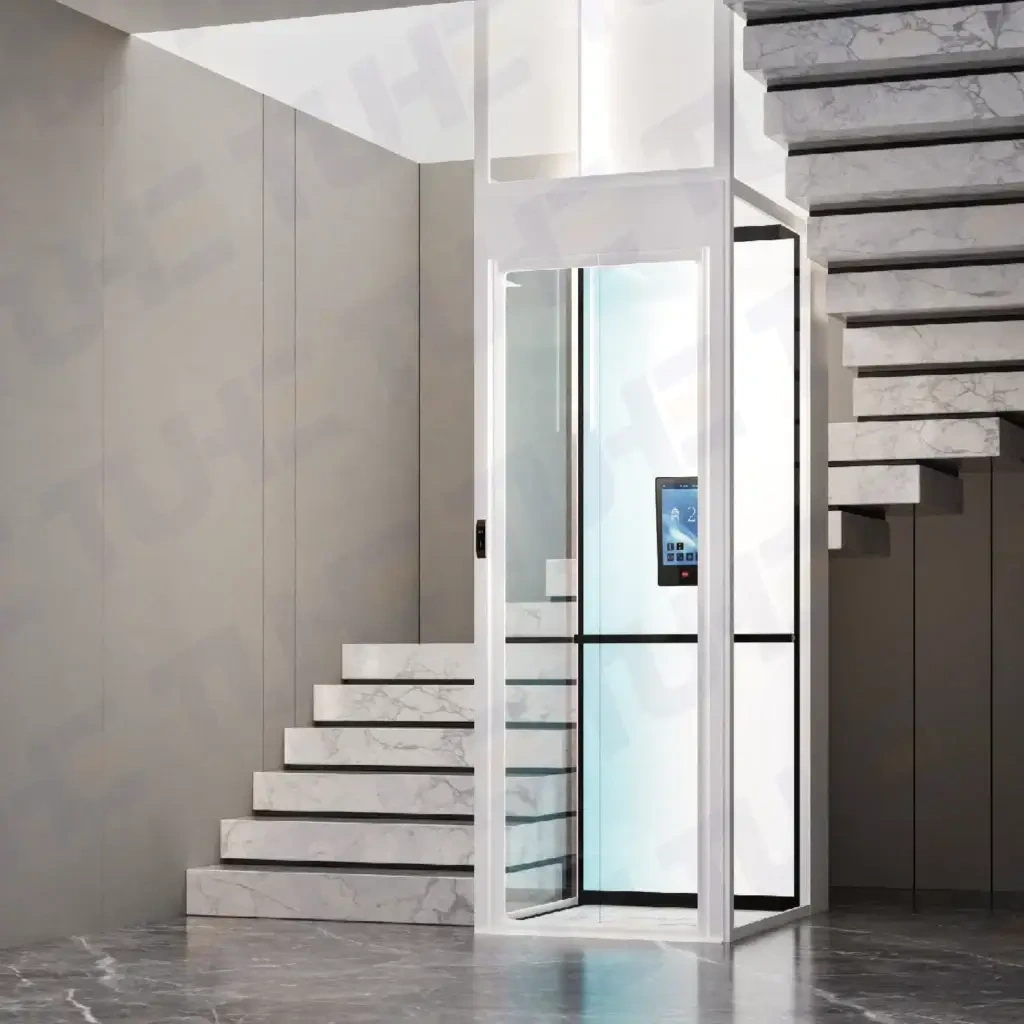
Otis is one of the oldest elevator companies in the world and brings decades of engineering history to the Indian market. You can find its India operations on the official Otis India website.
Key strengths:
- Decades of engineering track record and strong brand recognition
- Particularly known for modernizing older lift installations
- Wide service network across major Indian cities
Trade-off to know: Otis is typically positioned for larger or higher-budget residential projects rather than compact home lifts, and regional service response can vary by city.
Best for: Homeowners who prioritise brand heritage and long-term structural reliability over the lowest upfront price.
Home Elevator Technology Types, Explained
Choosing a brand matters, but choosing the right technology type matters just as much. Here’s a simple breakdown of the main options available in India.
| Type | How It Works | Pros | Cons |
|---|---|---|---|
| Hydraulic | A fluid-powered piston lifts the cabin | Smooth, quiet, powerful | Needs pit/overhead space, periodic fluid maintenance |
| Gearless/MRL | Direct-drive electric motor, no gearbox or separate machine room | Energy-efficient, quiet, saves space | Higher upfront cost |
| Vacuum/Pneumatic | Air pressure moves a self-supporting tube cabin | No pit needed, fast install, distinctive look | Lower load capacity |
| Screw-Drive | A rotating screw-and-nut mechanism moves the cabin | Minimal civil work, predictable movement | Slower speed, less common replacement parts |
| Pitless | Telescopic pistons avoid the need for a deep pit | Easier retrofit option | Limited speed and capacity |
What a Home Elevator Actually Costs (Beyond the Sticker Price)
Most comparison articles stop at the purchase price. Here’s the fuller picture of what ownership involves:
- Purchase price: Varies widely by brand, technology, and customisation — compact models sit at the lower end, while premium gearless/MRL systems sit at the higher end.
- Installation/civil work: Ranges from minimal (pitless, vacuum, or compact MRL models) to significant (traditional shaft-and-pit systems).
- Annual Maintenance Contract (AMC): Typically charged as a percentage of the lift’s purchase price per year, covering servicing, safety checks, and part replacement – always get this figure in writing.
- Electricity running cost: Battery-driven or energy-efficient MRL lifts generally use less power than older hydraulic systems.
- Warranty: Coverage periods differ by brand and by component (motor, cabin, safety systems often carry different warranty terms) — ask for this in writing before you sign.
Rule of thumb: Budget extra for maintenance and running costs every year over the lift’s 15–20 year lifespan, on top of the purchase price.
Safety Certifications to Check Before You Buy
Any credible home elevator manufacturer in India should be able to show you proof of the following:
- IS 17900 — India’s mandatory national lift safety standard since 22 December 2025, built on the European EN 81-20/50 framework. Confirm with your BIS-registered vendor or check details on the Bureau of Indian Standards website.
- EN 81 — the European safety standard that IS 17900 is based on, often cited by premium brands directly.
- ISO 9001 — a manufacturing quality management certification, verifiable through the International Organization for Standardization (ISO).
- Practical safety features: battery backup, auto-rescue/manual descent, door interlocks, overload sensors, and an alarm/intercom system.
Don’t just take a brand’s word for it – ask for the certification documents, and check whether the installer is specifically trained on IS 17900 compliance. Independent inspection agencies such as TÜV SÜD India offer third-party verification services if you want extra assurance before signing off on installation.
How to Choose the Right Brand for Your Home
Ask yourself these questions before deciding:
- How much shaft or pit space do I actually have? Little to no space usually points toward compact hydraulic/MRL models, vacuum lifts, or pitless systems.
- What’s my real budget, including AMC? Factor in the annual maintenance cost, not just the purchase price, when comparing brands.
- Do I need it installed fast? Compact hydraulic/MRL and vacuum-based lifts generally install faster than traditional shaft-and-pit systems.
- Is this for elderly or mobility needs specifically? Look for brands offering home lifts and stairlifts/wheelchair platforms under one warranty, so you’re not managing multiple vendors.
- Am I in a tier-2 or tier-3 city? Check the company’s actual service network reach – not just website claims – since after-sales support is where many premium brands fall short outside major metros.
- Do I want smart-home or app integration? This is more common in premium and global brand product lines.
Not sure which lift type fits your home? Book a free site survey with Vin Grace and get a written quote before you decide.
Final Verdict
If you want a strong overall balance of affordability, fast installation, safety certification, and a wide product range – home lifts, stairlifts, and wheelchair lifts under one roof – Vin Grace is worth serious consideration for Indian homeowners in 2026.
For more specific needs – premium finishes (Elite Elevators), a distinctive vacuum-lift design (Nibav), or global smart-building technology (KONE, Otis) – the other brands in this list are worth a closer look based on your budget and home layout.
Whichever brand you choose, always request a free site survey, compare at least two to three written quotes, confirm current IS 17900 certification, and get the AMC terms in writing – not just the purchase price.
Frequently Asked Questions
Q. Which is the best home elevator company in India in 2026?
There’s no single “best” brand for everyone – it depends on your budget, available space, and city. Vin Grace is a strong option for buyers prioritising affordability, fast installation, and a wide product range (home lifts, stairlifts and wheelchair lifts). Nibav and Elite are known for vacuum and premium gearless technology, respectively. KONE and Otis are known for global brand trust and long operating history.
Q. How much does a home elevator cost in India?
Home lift prices in India vary a great deal – compact 2-person lifts sit at the more affordable end, while premium gearless or MRL systems can run into several lakhs more, depending on brand, capacity, and customisation. Always request a written quote after a site survey rather than relying on published starting prices, which change over time.
Q. Do all home elevators need a pit or machine room?
No. Vacuum/pneumatic lifts, many MRL systems, and screw-drive or pitless models don’t require a deep pit or a dedicated machine room, which makes them a popular choice for retrofits in existing homes.
Q. How long does home elevator installation take?
It depends on the technology. Compact hydraulic or MRL lifts and vacuum lifts are generally quicker to install than traditional traction systems that require a full pit and shaft, which can take considerably longer. Ask each company for a written installation timeline specific to your home before committing.
Q. What safety certifications should I look for?
Check for IS 17900 (India’s mandatory lift safety standard as of December 2025), EN 81 (the European standard it is based on), and ISO 9001 manufacturing certification. Also ask about battery backup, auto-rescue, and overload sensors as standard safety features.
Q. Is EMI available for home elevators in India?
Many brands, including Vin Grace, offer EMI or financing options, which can make home lifts and stairlifts more accessible. Ask each company directly about current EMI terms, as these change over time.
Q. How much space is needed for a small home lift?
Compact 2-person lifts generally need a small footprint and are designed to fit homes with a limited number of floors. Exact space requirements depend on the specific model, so it’s best to confirm with a site survey.
Sources referenced: Bureau of Indian Standards (bis.gov.in), TÜV SÜD India (tuvsud.com/en-in), International Organization for Standardization (iso.org).