Planning to install a compact home lift for two people? You’re likely comparing prices, technologies, and brands — and the numbers online can vary wildly, from ₹12 lakh to over ₹60 lakh.
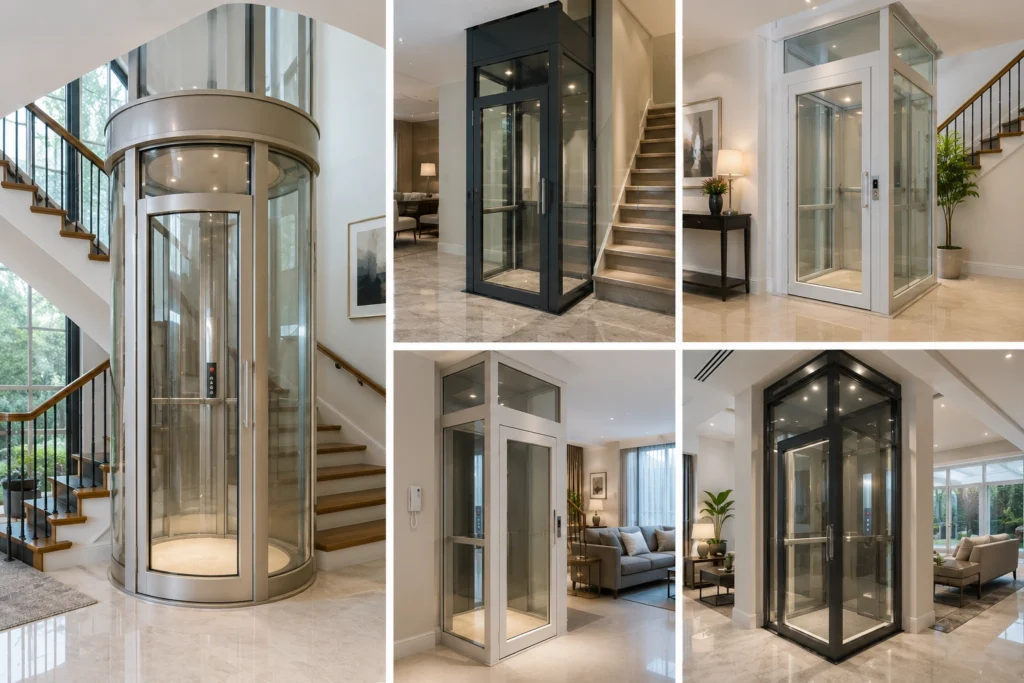
This guide breaks down exactly what drives that price gap, so you know what you’re actually paying for.
Quick answer: A 2-person home lift in India typically costs between ₹13.5 lakh and ₹35 lakh, depending on technology (hydraulic, vacuum, MRL, or gearless), number of floors, door type, and cabin customisation. At Vin Grace, IS 17900-compliant 2-person lifts start at ₹13.5 lakh, with EMI options available.
What Is a 2-Person Home Lift?
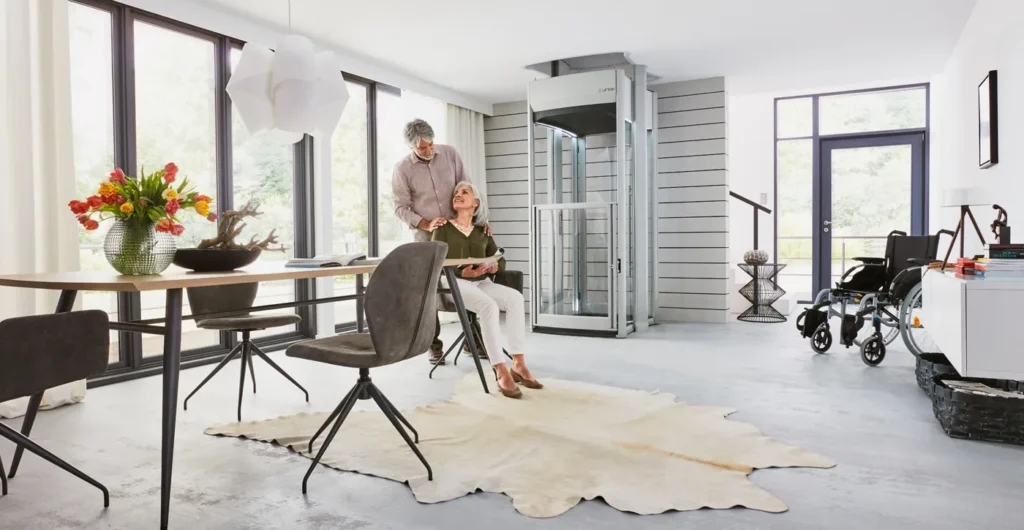
A 2-person home lift is a compact, space-efficient residential elevator designed to move two people (or one person plus groceries/a wheelchair) between floors.
Unlike bulky commercial elevators, these models are built specifically for Indian homes — needing minimal shaft space, running at low speeds of 0.2–0.6 m/s, and blending into interiors with glass, wood, or LED cabin finishes.
They’re increasingly popular in duplexes, villas, and multi-storey homes in Delhi, Mumbai, Bengaluru, Chennai, and Pune, largely driven by India’s ageing population and growing demand for barrier-free, accessible homes.
2-Person Home Lift Price in India: 2026 Overview
Here’s a quick snapshot before we go into detail. Prices vary primarily by drive technology:
| Technology | Price Range (G+1) | Pit/Shaft Required | Best For |
|---|---|---|---|
| Hydraulic | ₹13.5L – ₹20L | Yes (shallow pit) | Budget-friendly, reliable, works in power cuts |
| Pneumatic/Vacuum | ₹15L – ₹26L | No | Retrofits, modern aesthetic, quick install |
| Traction / Gearless MRL | ₹16L – ₹28L | No machine room | Energy efficiency, multi-floor homes |
| Screw-Drive | ₹15L – ₹22L | No | Minimal civil work, predictable ride |
Note: Prices are indicative starting rates for a 2-person capacity, exclude applicable taxes, and increase with additional floors and customisation.
Types of 2-Person Home Lifts by Technology
1. Pneumatic (Vacuum) Lifts
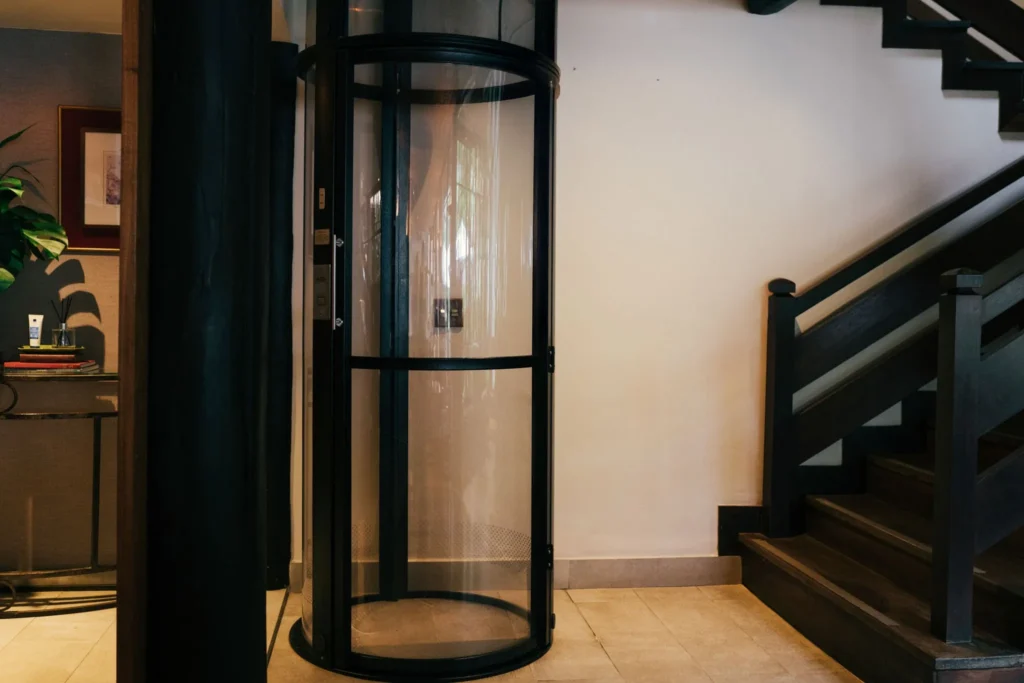
These use air-pressure differences to move a self-supporting cabin – no pit, no machine room, no counterweights. Installation is often completed in 24–48 hours, making them a strong choice for retrofitting into existing homes without structural changes.
Trade-off: Lower load capacity and not ideal for very frequent heavy use.
2. Hydraulic Lifts
A fluid-powered piston raises the cabin — the most mature, dependable technology, and generally the most budget-friendly. They continue working smoothly during power fluctuations, which matters in cities with frequent outages.
Trade-off: Requires a shallow pit and periodic hydraulic fluid servicing.
3. Traction / Gearless MRL (Machine-Room-Less) Lifts
A gearless motor directly drives the cabin via steel ropes or belts — no separate machine room needed. These are more energy-efficient long-term and offer a smoother, quieter ride.
Trade-off: Higher upfront cost and needs skilled installation.
4. Screw-Drive Lifts
A rotating screw-and-nut mechanism lifts the platform directly — minimal civil work and very predictable movement, though slower and with fewer local service options.
Door Types: Swing vs Sliding – Impact on Price
Beyond technology, door type is one of the biggest price differentiators for 2-person lifts:
Swing Door Models
Traditional hinged doors on either side of the cabin. They need extra clearance for the door swing but are generally more affordable — a good fit where space around the shaft isn’t tightly constrained.
Sliding Door Models
Doors slide sideways, saving space and giving a sleeker, more modern look. These typically cost more due to the space-saving mechanism and premium finish options, but are ideal for compact Indian apartments and duplexes.
Detailed Price Breakdown by Number of Floors
Price rises with each additional floor/stop due to extra shaft length, wiring, doors, and safety components. Here’s a realistic 2026 breakdown for a 2-person lift across common technologies:
| Floors | Hydraulic (Swing Door) | Vacuum/Pneumatic | Traction/MRL (Sliding Door) |
|---|---|---|---|
| G+1 | ₹13.5L – ₹17L | ₹15L – ₹19L | ₹17L – ₹21L |
| G+2 | ₹15L – ₹19L | ₹17L – ₹21L | ₹19L – ₹24L |
| G+3 | ₹17L – ₹22L | ₹19L – ₹24L | ₹22L – ₹27L |
| G+4 | ₹19L – ₹25L | ₹22L – ₹27L | ₹25L – ₹31L |
Prices are indicative, exclude taxes, and vary based on customisation, city, and site conditions. Always confirm with a written quote after a free site survey.
Factors That Affect 2-Person Home Lift Price
1. Lift Technology
Hydraulic lifts are generally the most affordable; vacuum and gearless MRL systems cost more upfront but often save on long-term running costs.
2. Number of Floors
Each additional floor adds roughly ₹2–4 lakh due to extra shaft, doors, and wiring requirements.
3. Door Type
Sliding doors typically cost more than swing doors due to their space-saving mechanism.
4. Customisation and Cabin Finish
Glass panels, LED lighting, wood or stainless-steel finishes, and smart touch controls can add ₹1–5 lakh depending on the level of customisation.
5. Brand and Certification
IS 17900, ISO 9001:2015, and CE-marked components typically cost more but ensure long-term safety and compliance.
6. Installation Complexity
Pre-engineered, pitless models are cheaper and faster to install than lifts requiring pit digging or machine-room construction.
Vin Grace 2-Person Home Lift Pricing (2026)
Vin Grace offers IS 17900-compliant 2-person home lifts starting at ₹13.5 lakh, combining hydraulic reliability with modern vacuum-inspired aesthetics at competitive rates. Key advantages:
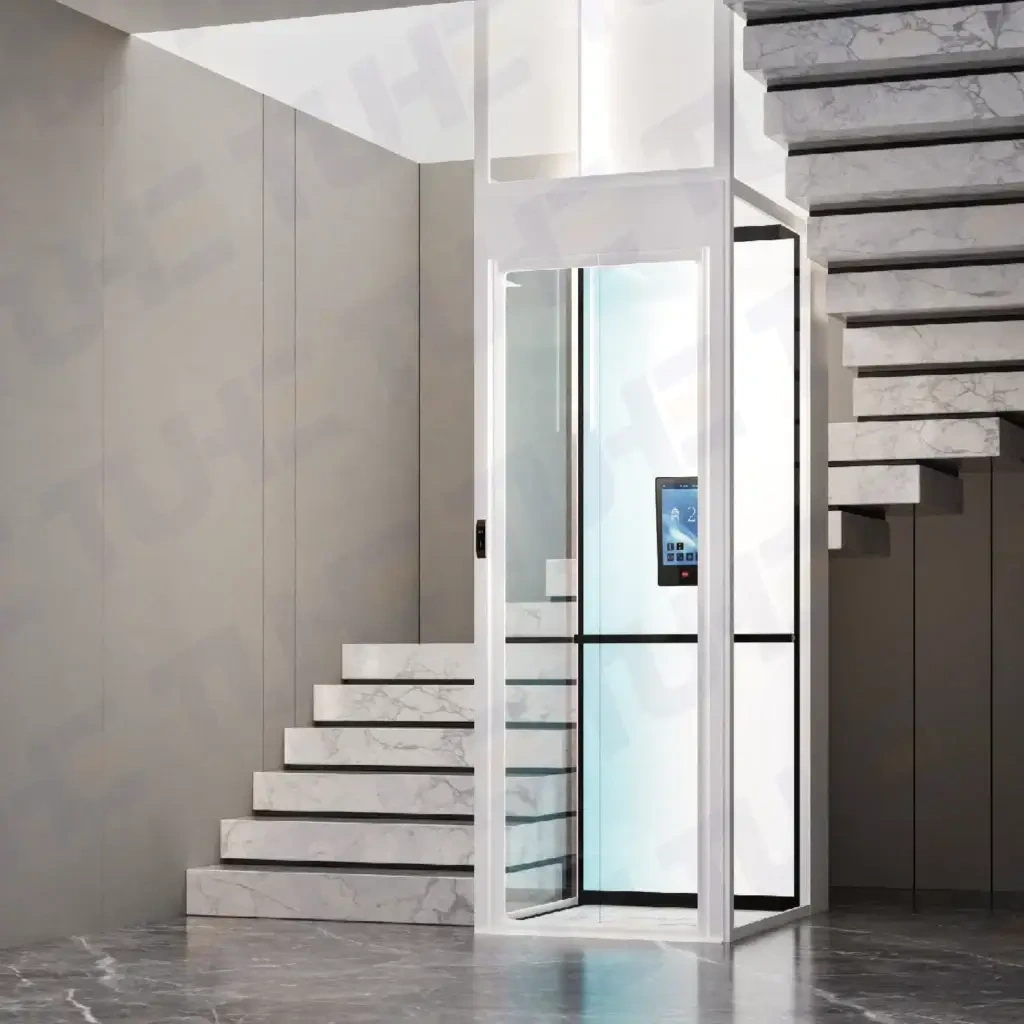
- Minimal shaft space required (as small as 1m x 1m)
- Load capacity 200–250 kg, suitable for two adults or one adult with groceries
- Operating speed of 0.2–0.6 m/s for a smooth, comfortable ride
- Free site survey and consultation across Delhi NCR, Mumbai, Bengaluru, Pune, and other major cities
- Full customisation: glass, wood, or LED cabin finishes to match your interiors
Cost of Ownership: AMC, Maintenance & Running Costs
Most buying guides stop at the purchase price. Here’s what ongoing ownership actually costs:
| Cost Type | Typical Range (2026) |
|---|---|
| Annual Maintenance Contract (AMC) | 5–8% of purchase price per year |
| Electricity running cost | Under 1 kWh per trip for battery/MRL models |
| Civil work / permits (city-dependent) | ₹50,000 – ₹1 lakh (e.g., municipal approvals) |
| Certification renewal (as applicable) | Included in most AMC packages |
Rule of thumb: Budget an additional 8–10% of the purchase price per year for maintenance and running costs over the lift’s 15–20 year lifespan.
EMI & Financing Options
A 2-person home lift is a significant investment, but it doesn’t have to be paid upfront. Vin Grace offers flexible EMI plans that let you spread the cost over manageable monthly instalments.
Making it easier to plan for elderly parents’ accessibility needs without straining your budget. Ask your consultant for current EMI tenures and interest-free options during your free site survey.
Tax Benefits You May Be Eligible For
If the home lift is being installed to support a family member with a certified disability, you may be eligible to claim a deduction under Section 80DD of the Income Tax Act for expenses related to their medical treatment, care, and accessibility equipment. Eligibility criteria and deduction limits vary — consult a tax professional to confirm applicability to your situation.
Safety Certifications & Standards
Before buying, verify these certifications with any manufacturer:
- IS 17900 — India’s mandatory national safety standard for home lifts (mandatory for all new installations since 22 December 2025)
- ISO 9001:2015 — manufacturing quality management certification
- EN 81 / CE marking — international safety benchmarks often cited by premium brands
Essential safety features to insist on: Unintended Car Movement Protection (UCMP), Ascending Car Overspeed Protection, Automatic Rescue Device (ARD) for power failures, 1-hour emergency lighting, overload sensors, and door interlocks.
Installation Process & Timeline
- Free site survey and space/Vastu-compliant design consultation
- Civil modifications (minimal for pitless/vacuum models — typically 7–15 days)
- Lift assembly and electrical integration
- Safety testing and IS 17900 certification
- Handover with usage training
Total timeline ranges from as little as a few hours for compact pitless models to 4–6 weeks for lifts requiring full civil work. Vin Grace manages permits and installation end-to-end to minimise disruption to your home.
City-Wise Price Considerations
| City | Key Consideration |
|---|---|
| Delhi NCR | MCD approvals may add ₹50,000–₹1 lakh; space-crunch and Vastu preferences common |
| Mumbai | Coastal humidity requires corrosion-resistant components; power-cut-resilient models recommended |
| Bengaluru / Chennai | High demand for compact, MRL-style lifts in apartments and duplexes |
| Pune | Growing villa and multi-storey housing market; hydraulic lifts popular for 2–4 floor homes |
Vin Grace vs Other Home Lift Brands – Price Comparison
| Brand | Starting Price (2-Person, G+1) | Technology Focus | Installation Time |
|---|---|---|---|
| Vin Grace | ₹13.5 lakh | Hydraulic, MRL, vacuum-inspired hybrid | 2 hours – 15 days |
| Nibav Lifts | ~₹11.99 lakh | Pneumatic vacuum only | 24–48 hours |
| Elite Elevators | ~₹26.8 lakh | Swing/sliding door hydraulic & gearless | 2–3 weeks |
Prices sourced from publicly available brand information as of 2026 and are subject to change; always request a current written quote directly from each brand.
Why Invest in a 2-Person Home Lift?
- Enhanced Mobility & Safety: Reduces stair-fall risk significantly — especially valuable for seniors and multi-storey homes
- Property Value Boost: Homes with lifts are seen as future-ready and often fetch a stronger resale value
- Space Efficiency: Pitless and MRL options fit into tight footprints without major civil work
- Daily Convenience: Effortlessly carry luggage, groceries, or laundry between floors
- Aesthetic Appeal: Glass cabins, LED lighting, and premium finishes add a luxury touch to any home
How to Choose the Right 2-Person Lift for Your Home
- Check available shaft space — under 1.2m x 1.2m usually means pitless/vacuum or compact MRL models
- Confirm floor count — this is the single biggest price driver after technology type
- Decide on door type — swing for lower cost, sliding for space-saving and modern look
- Verify IS 17900 compliance — non-negotiable for safety and legal compliance
- Ask for AMC terms in writing — not just the purchase price
- Request 2–3 site surveys before finalising, to compare real, sighted quotes
Why Choose Vin Grace
Vin Grace combines hydraulic reliability with modern, space-saving design at one of the most accessible starting prices in the Indian market.
With free site surveys, pan-India service coverage, flexible EMI options, and full IS 17900 compliance, Vin Grace makes installing a home lift straightforward — without compromising on safety or finish quality.
Conclusion
A 2-person home lift is no longer a luxury reserved for large villas — it’s a practical, space-efficient, and increasingly affordable solution for modern Indian homes in 2026.
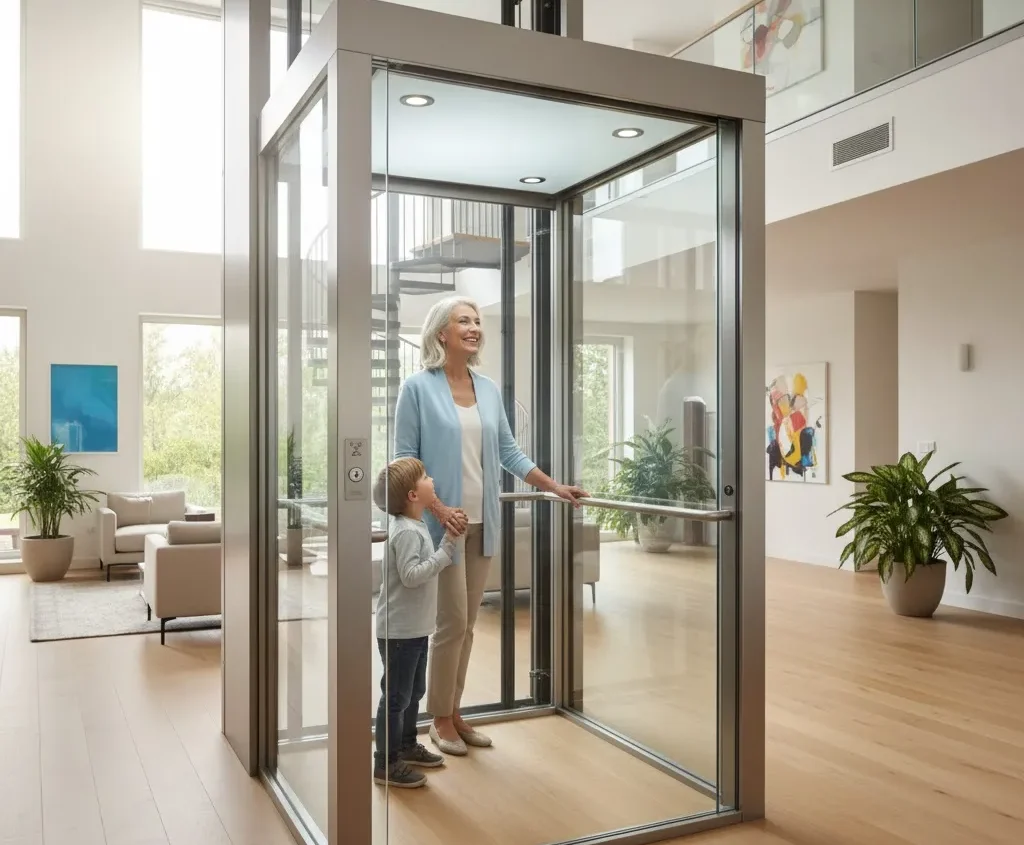
Whether you prioritise the lowest upfront cost, the fastest installation, or the most premium finish, understanding the technology, floor count, and door type behind the price lets you compare quotes with real confidence.
With Vin Grace’s 2-person lifts starting at ₹13.5 lakh and full IS 17900 compliance, now is a practical time to get a free site survey and see exactly what fits your home.
Frequently Asked Questions
Q. What is the starting price of a 2-person home lift in India in 2026?
A basic 2-person home lift typically starts from ₹13.5 lakh to ₹15 lakh for a single-floor (G+1) hydraulic model, rising to ₹25 lakh or more for multi-floor, gearless, or heavily customised configurations.
Q. How much space is needed for a 2-person home lift?
Most models need as little as 1m x 1m of shaft space — roughly the size of a small closet — and many pitless or vacuum designs don’t require a deep pit at all.
Q. Do 2-person lifts need a pit or machine room?
Hydraulic lifts typically need a shallow pit, while vacuum and many MRL models are pitless and machine-room-less, simplifying installation significantly.
Q. How long does installation take?
Compact pitless or vacuum models can be installed in as little as a few hours to 48 hours. Lifts requiring civil work (pit, shaft modifications) typically take 2–6 weeks.
Q. What is the weight capacity of a 2-person lift?
Most 2-person lifts are rated between 200 kg and 250 kg — enough for two adults or one adult with groceries or a wheelchair.
Q. How fast do 2-person residential elevators move?
Typical speeds range from 0.2 to 0.6 metres per second, offering a smooth, comfortable ride for short vertical distances.
Q. Can I customise the cabin design?
Yes. Most manufacturers, including Vin Grace, offer customisation across glass panels, lighting, flooring, and wall finishes to match your home’s interior style.
Q. Is EMI available for home lifts?
Yes. Vin Grace offers flexible EMI plans, making it easier to spread the cost of installation over manageable monthly instalments.
Q. Are there any tax benefits for installing a home lift?
If the lift supports a family member with a certified disability, you may be eligible for a deduction under Section 80DD of the Income Tax Act. Consult a tax professional to confirm your eligibility.
Q. Are home lifts safe to use?
Yes, when installed by certified professionals and compliant with IS 17900. Look for automatic rescue devices, overload sensors, emergency lighting, and door interlocks as standard safety features.