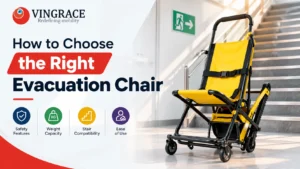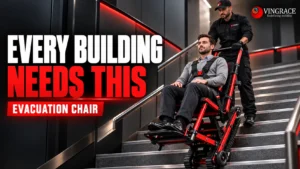
Every building has fire exits. But very few plan how someone who cannot walk will get down those stairs when the alarm rings. An evacuation chair solves that problem, but only if you choose the right one.
The wrong chair can sit in a cabinet for years and still fail on the one day it is needed.
Quick Answer: How Do You Choose the Right Evacuation Chair?
Content Overview
ToggleTo choose the right evacuation chair, match the chair to your building and the people inside it. Check five things: the direction you must travel (down only, or up from a basement), the heaviest person you may need to carry, the width of your stairs and landings, the brakes and speed control, and who will operate it. Then plan where to store it, who to train, and how it will be serviced every year.
In a fire, earthquake, or power cut, lifts should not be used. That leaves the stairs. For a wheelchair user, an elderly parent, a hospital patient, or someone with a broken leg, those stairs can become a trap.
An emergency evacuation chair lets one trained helper bring that person down safely, without heavy lifting. But not every chair suits every building. A chair that works well in a four-floor office may not work in a hospital with basement wards.
This guide explains, step by step and in simple words, how to pick the right evacuation chair. It is written for facility managers, hospital and school administrators, hotel and mall managers, housing society committees, and families living in multi-storey homes.
What Is an Evacuation Chair and Who Needs One?
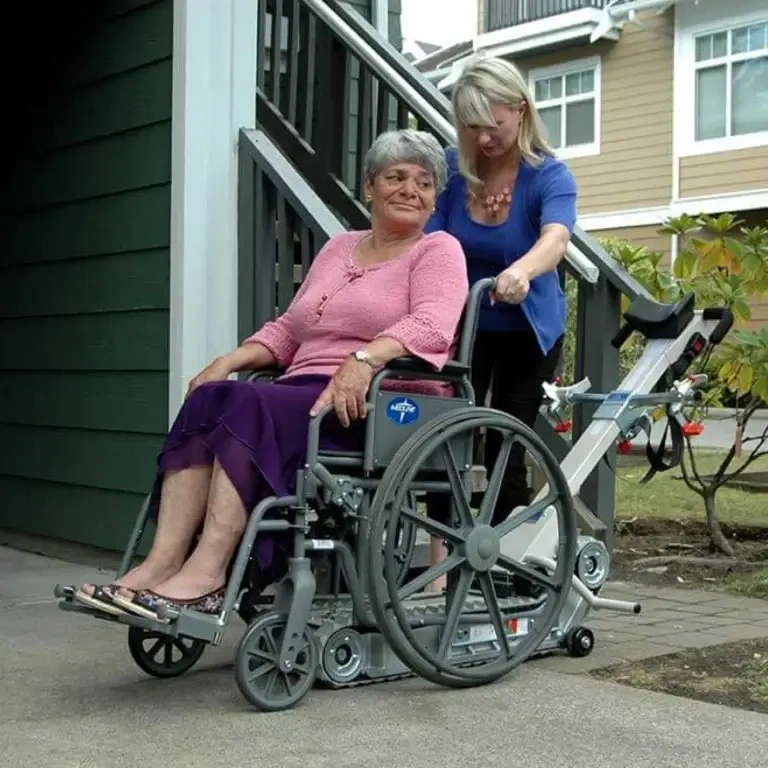
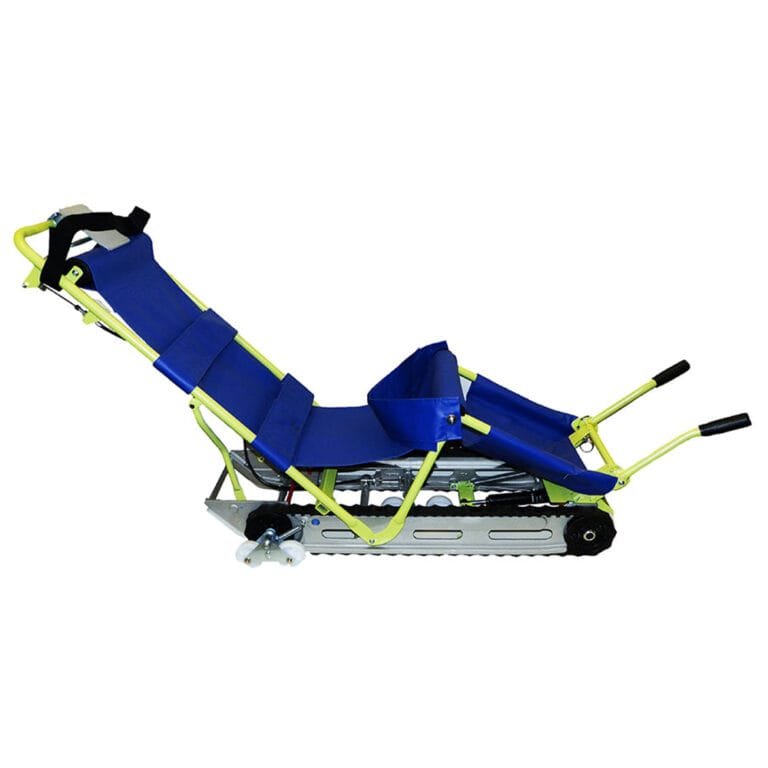
An evacuation chair is a light, foldable chair with tracks or belts that glide down stairs. It lets one trained helper move a person with limited mobility down a staircase during an emergency, when lifts cannot be used. It is also called an evac chair, stair evacuation chair or emergency stair travel device.
It is not a daily wheelchair. It stays folded near a stairwell, ready for the day it is needed. If you need help on stairs every day, a stair lift or a stair climbing wheelchair is a better fit.
Who may need an evacuation chair?
- Wheelchair users and people who use walkers or crutches
- Elderly people who find stairs hard or slow
- People with a fracture, recent surgery or a heart or lung condition
- Women in late pregnancy
- Hospital patients and nursing home residents
Which buildings should have one
Any building with more than one floor where people with limited mobility live, work or visit. This includes hospitals and nursing homes, offices and IT parks, schools and colleges, hotels, malls, airports, metro stations, factories and high-rise housing societies.
What Indian law and guidelines expect
No single Indian rule tells you which chair model to buy. But the law and building guidelines clearly expect buildings to plan safe evacuation for everyone:
- Section 8 of the Rights of Persons with Disabilities Act, 2016 gives persons with disabilities equal protection and safety in situations of risk and disasters.
- The Harmonised Guidelines and Standards for Universal Accessibility in India 2021 include a full section on emergency evacuation.
- The National Building Code of India 2016, Part 4 (Fire and Life Safety), sets rules for exits, staircases and refuge areas.
Good practice from abroad points the same way. UK government fire safety guidance says a building’s evacuation plan should not depend on the fire brigade arriving to make it work. An evacuation chair, with trained staff, is one practical way to meet that goal. Always check local rules with your fire safety consultant or fire department.
8 Things to Check Before You Choose an Evacuation Chair
These eight checks cover almost every buying decision. Go through them in order, and you will narrow the choice to one or two suitable models.
1. Do you need to go down only, or also up?
This is the most important question. Most evacuation chairs only go down the stairs. The passenger’s own weight moves the chair, and a brake or speed governor keeps it slow and steady.
But many Indian buildings have basements, lower-ground wards, underground parking or gyms below the exit level. People must be taken up to get out. The US Department of Labor warns that descent-only chairs will not help someone evacuate from a basement or parking garage.
For upward travel, you need a powered stair-climbing evacuation chair, or a carry chair with lifting handles that needs two or more people.
Ask the supplier: Can this chair go up stairs as well as down? How many people does that take?
2. What weight and body size must it carry?
Every chair has a maximum weight capacity. Many standard models are rated at about 130 to 180 kg. For example, the Garaventa EvacuTrac carries up to 136 kg. Bariatric evacuation chairs are built stronger and wider for heavier passengers.
Think about the heaviest person who may realistically need the chair, then add a safety margin. Also check the seat width and whether the straps fit larger or very small passengers, such as children.
Ask the supplier: What is the tested weight limit, and what is the seat width?
3. Will it fit your stairs and landings?
Measure your narrowest staircase and your smallest landing. The chair must turn safely on each landing while other people are still using the stairs.
Also look at the stair surface. Marble, polished granite, tiles, wet outdoor steps and steep service stairs all behave differently. Tight spiral stairs are a problem for many chairs.
Ask the supplier: What stair width and landing size does this chair need? Can you demonstrate it on our own stairs?
4. How does it brake and control speed?
A runaway chair on stairs is dangerous. Look for:
- Speed control. A governor or friction system that keeps descent slow. The EvacuTrac’s hydraulic governor holds the speed at about 1.1 m per second for a 100 kg passenger.
- Failsafe brake. The chair should stop on its own if the operator lets go of the handle.
- Parking brake. So the chair stays still on landings and flat floors.
- Good grip. Rubber tracks or belts that hold firmly on each step edge.
Ask the supplier: What happens if the operator lets go halfway down the stairs?
5. Who will operate it, and how easy is it?
In a real emergency, the operator may be a security guard, a nurse on night shift, or a teacher. The chair must be simple enough for them.
- Choose a chair that one trained person can run on the way down.
- Check the chair’s own weight. A light chair (the EvacuTrac weighs about 20 kg) is easier to carry up to the floor where it is needed.
- Check how fast it unfolds. It should be ready in seconds.
- For powered chairs, plan a battery charging routine so it is never flat when needed.
Ask the supplier: How long does it take a new operator to learn? Is training included?
6. Is it safe and comfortable for the passenger?
A frightened passenger needs to feel secure. Look for a padded seat and headrest, chest and lap straps, and a footrest. Check that a wheelchair user can be moved across easily. Fire-retardant, easy-to-clean seat fabric is a plus.
Most importantly, talk to the people who may use it. The US Department of Labor advises consulting people with disabilities when choosing evacuation devices, because their needs differ.
7. Where will you store it, and how many do you need?
A chair locked in an office is useless. Store each chair in a clearly signed wall cabinet or bracket, next to the evacuation stairwell or refuge area on the floor where it will be used.
A common rule is at least one chair per evacuation stairwell or per refuge area. Many sites place one on every floor where people with limited mobility may be present. A slim folded chair (the EvacuTrac folds to 270 mm deep) is easier to store without blocking the escape route.
8. Check standards, warranty, training and service
- Tested to a standard. RESNA ED-1 is a US performance standard for emergency stair travel devices. It covers weight capacity, stability and maneuverability. Ask for test results or certifications such as CE marking.
- Warranty. Compare warranty length on the frame and on parts that wear, like belts and tracks.
- Local service. Choose a supplier who offers an annual maintenance contract (AMC), spare parts, and quick service in your city.
- Training. On-site operator training should be included, with refresher sessions.
Ask the supplier: Who will service the chair, how often, and how fast can you reach us?
Types of Evacuation Chairs Compared
There are four main types of evacuation chair. The right one depends mostly on travel direction, passenger weight and staff available.
| Type | How it works | Best for | People needed | Watch out for |
|---|---|---|---|---|
| Manual descent-only chair | Glides down on tracks or belts; gravity moves it, brakes control speed | Offices, schools, hotels and homes where everyone exits downward | 1 trained operator | Cannot go up; not suitable for basements |
| Carry chair (up and down) | Glides down; carried up using extra handles | Short upward trips, small basements, ambulance use | 2 or more to go up | Manual lifting is tiring and can injure helpers |
| Powered stair-climbing chair | Battery motor drives tracks up and down | Hospitals, basements, underground parking, heavy passengers | 1 trained operator | Needs regular charging; heavier and costs more |
| Bariatric evacuation chair | Stronger frame, wider seat, higher weight limit | Hospitals and public buildings with heavier users | 1 to 2 | Larger and heavier to store and carry |
Many buildings use a mix. For example, a hospital might keep a powered chair such as the Garaventa Powertrac at the basement stairwell and descent-only chairs on the upper floors.
For bedridden patients who cannot sit up, hospitals also need lying-down devices such as evacuation sheets or sleds. A chair does not replace them. If you are unsure whether you need an evacuation chair or a rescue chair, read our guide on rescue chair vs evacuation chair.
Quick decision guide
| If your situation is… | Consider this |
|---|---|
| All floors are above the exit, and stairs lead down | Manual descent-only chair |
| You have basements, lower-ground floors, or underground parking | Powered stair-climbing chair |
| A passenger may weigh more than the standard rating (often about 136 kg) | Bariatric or higher-rated model |
| Only one staff member is on duty at night | One-person chair with automatic brake; powered if you must go up |
| Your stairs or landings are narrow | Compact chair, tested on your own stairs first |
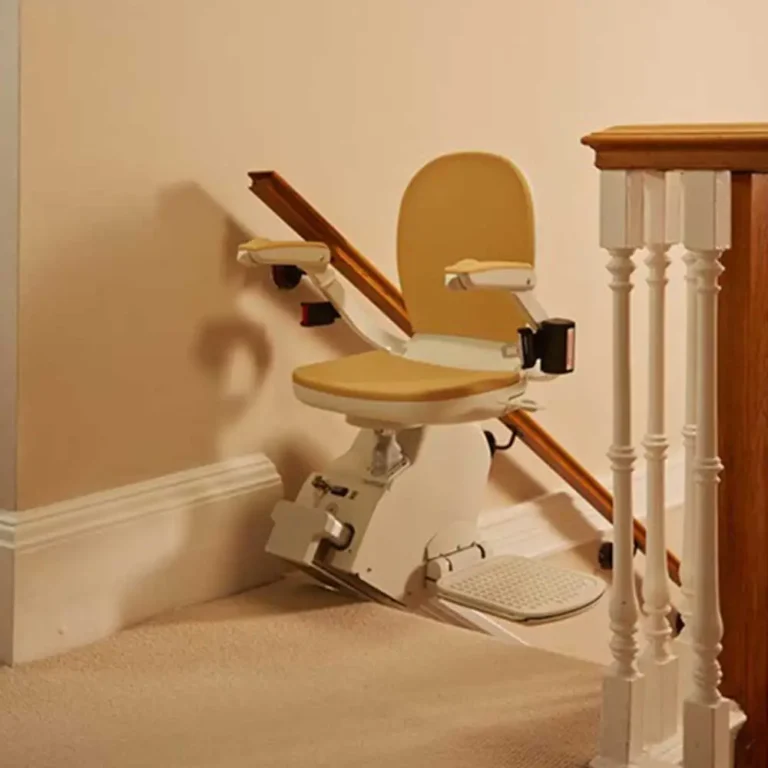
| The person needs stair help every day, not just in emergencies | A stair climbing wheelchair or stair lift instead |
How to Choose an Evacuation Chair: Step-by-Step
Follow these nine steps to go from “we need something” to the right chair, installed and ready.
- Walk through your building. Mark every stairwell, refuge area, basement, and final exit on a floor plan.
- List who may need help. Include staff, residents, patients, and regular visitors. Make a personal emergency evacuation plan (PEEP) for each person. The free NFPA evacuation planning guide has a simple checklist for this.
- Talk to the people who will use the chair. Ask what works for their body and their condition.
- Measure your stairs. Note stair width, landing size, number of floors, stair surface, and any spiral sections.
- Note the heaviest likely passenger. Choose a weight rating above this, with a margin.
- Decide travel direction and type. Down only, or up as well? Use the quick decision guide above.
- Work out how many chairs you need. Start with one per evacuation stairwell or refuge area, then add more for large floors or many users.
- Ask for a site survey and live demo. A good supplier will test the chair on your actual stairs before you buy.
- Compare after-sales support. Check warranty, AMC, spare parts, training, and service response time in your city.
Evacuation chair buying checklist
Copy this checklist and tick each item before you place an order.
- The chair can travel in the direction we need (down only, or up and down)
- Weight capacity is above our heaviest likely passenger
- It turns safely on our narrowest landing (tested on site)
- It has automatic braking and speed control
- One trained person can operate it on the way down
- Straps, headrest and seat suit our users
- We have a storage cabinet and sign next to each stairwell
- We know how many chairs we need and where each one goes
- On-site operator training is included
- Warranty, AMC, and local service are confirmed in writing
- Drills with the chair are added to our fire safety plan
Common Mistakes to Avoid
Most evacuation chair problems come from planning, not from the chair itself. Avoid these mistakes:
- Buying on price alone. A cheap chair with weak brakes or no local service can fail when it matters most.
- Buying descent-only chairs for a building with basements. People below the exit level will still be stuck.
- Ignoring the weight limit. Overloading a chair makes braking and control unsafe.
- One chair for a whole tower. It may be on the wrong floor, or blocked by smoke, when needed.
- Locking the chair away. It must be reachable in seconds, day and night.
- Storing it where it blocks the escape route. Use a slim wall cabinet away from the stair path.
- No training. An untrained operator can hurt the passenger and themselves.
- Forgetting night shifts and weekends. Train people on every shift, not just the day team.
- Relying only on the fire brigade. Your plan should work before rescuers arrive.
How to Keep Your Evacuation Chair Ready
An evacuation chair may sit unused for years, so regular checks matter.
- Monthly quick check. Look at the straps, tracks or belts, wheels, brakes and folding locks. Make sure the cabinet is not blocked.
- Battery care. For powered chairs, charge the battery as the maker advises and test it during inspections.
- Yearly professional service. Have a trained technician inspect and service the chair at least once a year, or as the maker recommends. A UK council fire safety guide notes that evacuation chairs should be serviced regularly by a competent person, with records kept.
- Keep a logbook. Record each check, service, repair and training session.
- Practise in drills. Use the chair, with a volunteer, during fire drills so operators stay confident.
Final Thoughts | The Right Chair Fits Your Stairs, Your People and Your Staff
The best evacuation chair is not the most expensive one. It is the one that travels the way your building needs, carries your heaviest likely passenger, fits your stairs, and can be used confidently by the staff on duty at 3 a.m.
Start with a building walk-through, talk to the people who may need help, and test the chair on your own stairs. Then train your team and practise every drill.
Need help choosing? Vin Grace offers free stairwell surveys across India, live demos, operator training, and annual maintenance. Explore our evacuation chair for stairs range or browse all Vin Grace mobility products to book your free site survey.
Frequently Asked Questions
Q. What is the best evacuation chair for a building with a basement?
A powered stair-climbing evacuation chair is usually best, because it can carry a person up the stairs as well as down. Descent-only chairs cannot move people upward. A carry chair can go up too, but it needs two or more helpers and involves manual lifting.
Q. How many evacuation chairs does a building need?
It depends on your fire safety plan. A common starting point is at least one chair per evacuation stairwell or per refuge area. Add more for large floors, several mobility-impaired occupants, or basements that need a powered chair.
Q. How much weight can an evacuation chair carry?
Many standard evacuation chairs are rated between about 130 kg and 180 kg. Bariatric models carry more. Always check the tested weight limit of the exact model, and choose one above the heaviest person likely to use it.
Q. Can one person operate an evacuation chair?
Yes. Most descent-only and powered evacuation chairs are designed for one trained operator. Carry chairs need two or more people when taking someone up the stairs. Whatever the type, the operator must be trained before an emergency happens.
Q. Are evacuation chairs mandatory in India?
No single Indian rule names a specific evacuation chair. However, the RPwD Act 2016 gives persons with disabilities equal protection in emergencies, and national building and accessibility guidelines expect safe evacuation for everyone. Check local requirements with your fire safety consultant or fire department.
Q. How often should an evacuation chair be serviced?
Do a quick visual check every month. Have a trained technician service the chair at least once a year, or as the manufacturer advises. Keep a written record of every check, service, and repair.
Q. What is the difference between an evacuation chair and a stair climbing wheelchair?
An evacuation chair is for emergencies. It is stored near the stairs and used only when lifts cannot run. A stair-climbing wheelchair is for everyday use, helping a person move between floors whenever they need to.
Q. Can an evacuation chair be used on narrow or spiral stairs?
Some chairs work on narrow stairs, but tight spiral stairs are difficult for most models. Measure your stair width and landings, and ask the supplier to demonstrate the chair on your actual stairs before you buy.
Related guides: What Is an Evacuation Chair and Why Every Building Needs One? · Evacuation Chair Complete Buying & Safety Guide for Indian Buildings 2026 · How to Choose Right Evacuation Chair for Your Building