Stairs can turn a simple trip from the bedroom to the living room into a daily struggle – for elderly parents, people recovering from surgery, or anyone living with limited mobility.
A stair-climbing wheelchair solves this problem, but the first big question every family asks is: electric or manual – which one is right for my home?
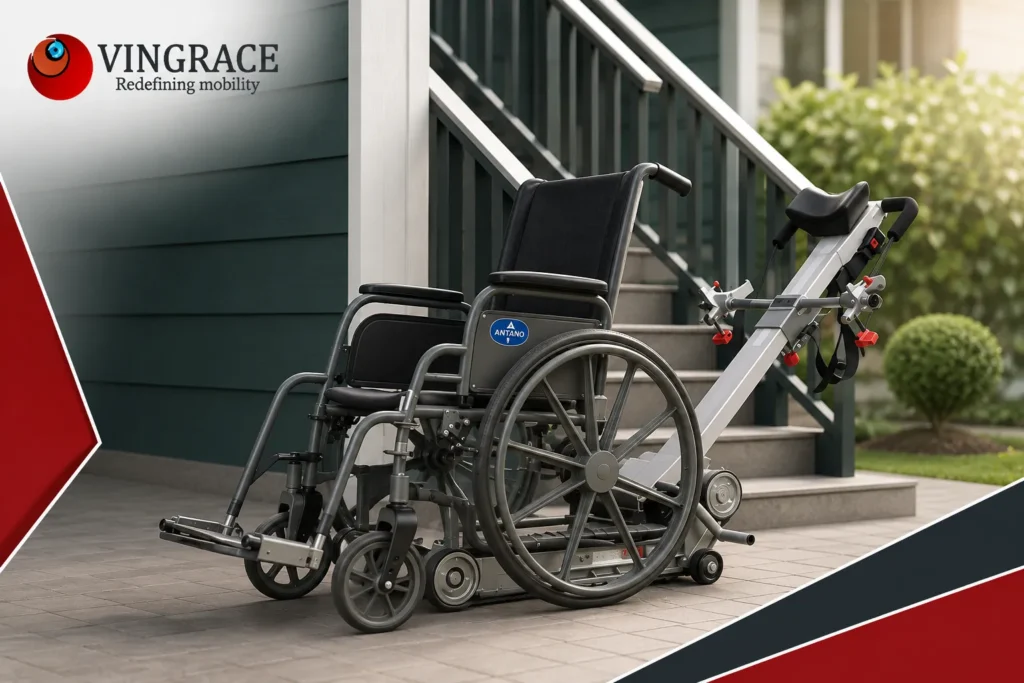
At Vin Grace, we have been answering this exact question for Indian families since 2007. We’ve set up manual and electric stair-climbing wheelchairs in homes, hospitals, and offices nationwide.
This guide shows what really helps real staircases and caregivers, not just spec-sheet comparisons. Below is a clear, honest breakdown with price ranges, use-cases, and safety points relevant to Indian homes in 2026.
Quick answer:
Choose a manual stair-climbing wheelchair if you have a strong caregiver and need it occasionally. Choose an electric stair-climbing wheelchair if you use it daily. It’s best if the caregiver is elderly or has limited strength. Also, consider it if the user is heavier and needs a smoother, safer climb.
What Is a Stair Climbing Wheelchair?
A stair climbing wheelchair is a mobility device built to carry a person safely up and down stairs – something a normal wheelchair cannot do. Unlike a stairlift, it needs no fixed rail or permanent installation, so it can travel between rooms, floors, or even different buildings. It comes in two main types:
- Manual Stair Climbing Wheelchair – Operated by a caregiver using a lever, handle, or track system. No battery, no motor.
- Electric Stair Climbing Wheelchair – Runs on a rechargeable battery and motor. The caregiver mostly guides direction; the machine does the heavy lifting.
Both types are built with safety belts, anti-slip tracks, and stabilizers, but they serve very different day-to-day needs.
Manual Stair Climbing Wheelchair | Overview
How it works: A trained caregiver or family member pushes and controls the chair using a lever or handlebar. The tracked wheels grip each step for a controlled descent or climb.
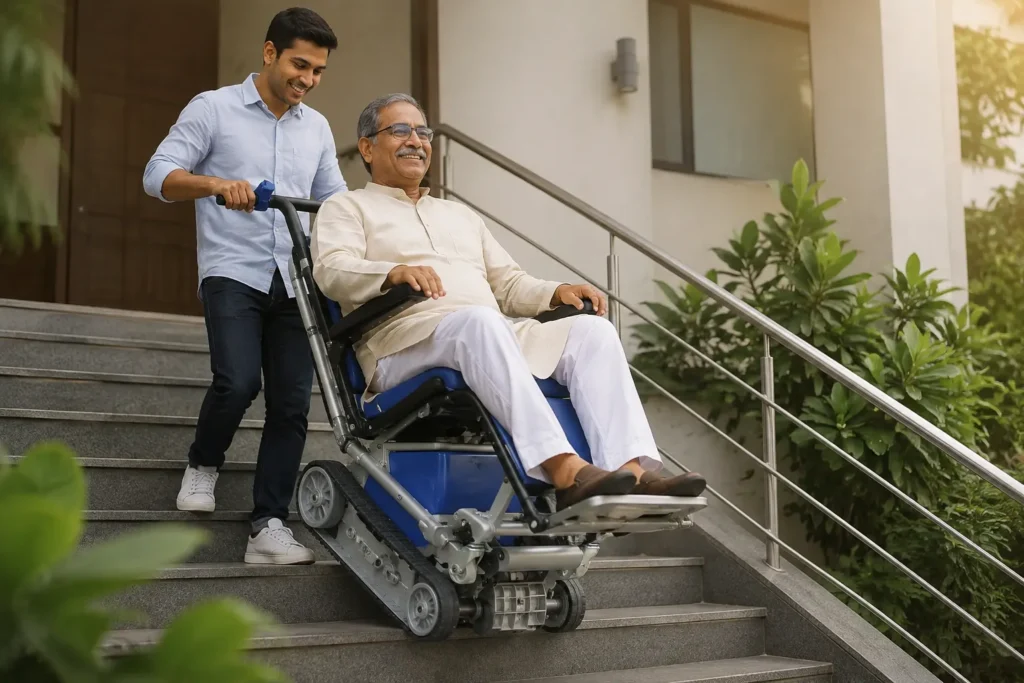
Best for
- Homes with a strong, able-bodied caregiver always available
- Occasional or short-term use, such as post-surgery recovery or a temporary injury
- Tighter budgets
- Hospitals and nursing homes for quick patient transfers
Typical price in India (2026): roughly ₹45,000 – ₹1,20,000 for basic attendant-guided chairs, and up to around ₹2.5 lakh for sturdier wheeled climbers – pricing depends on build quality, weight capacity, and brand. You can see current model-wise pricing on the Vin Grace stair climbing wheelchairs page.
Pros
- Lower upfront cost
- Lightweight, easy to fold and store
- No battery to charge or maintain
- Simple mechanics mean fewer repair issues
Cons
- Needs physical effort from the caregiver – tiring in multi-storey homes
- Not ideal for very heavy patients or elderly caregivers
- Slower and more effortful with daily use
Electric Stair Climbing Wheelchair | Overview
How it works: A battery-powered motor drives the tracks up and down the stairs. The caregiver mainly guides direction and speed using a control panel or joystick, so very little physical strength is needed.
Best for
- Daily, everyday use, not just occasional trips
- Elderly caregivers who cannot push heavy loads
- Multi-storey homes, hospitals and commercial buildings
- Heavier patients or frequent stair use
Typical price in India (2026): roughly ₹1,80,000 – ₹12,00,000+, depending on battery capacity, weight limit and features like remote control or auto-braking. See exact model pricing on the Vin Grace stair climbing wheelchairs page.
Pros
- Minimal physical effort for the caregiver
- Safer for frequent, daily stair use
- Auto-braking and stability sensors on most modern models
- Handles higher weight capacities smoothly
Cons
- Higher upfront investment
- Needs regular battery charging and occasional servicing
- Slightly heavier to transport than manual models
Electric vs Manual Stair Climbing Wheelchair | Quick Comparison Table
| Factor | Manual | Electric |
|---|---|---|
| Price range (India, 2026) | ₹45,000 – ₹2,50,000 | ₹1,80,000 – ₹12,00,000+ |
| Caregiver effort | High | Low |
| Best for | Occasional use | Daily use |
| Maintenance | Minimal | Battery and motor servicing |
| Weight and portability | Lighter | Slightly heavier |
| Ideal user | Young, able caregiver at home | Elderly caregiver or frequent stair use |
Why This Decision Matters | The Bigger Picture on Falls and Stairs
This isn’t just a comfort decision – stairs are a genuine safety risk for older adults. According to the World Health Organization, adults older than 60 suffer the greatest number of fatal falls worldwide, and falls are among the leading causes of injury-related hospital visits in this age group.
A stair-climbing wheelchair, used correctly, removes the single riskiest part of a senior’s day: the unassisted climb up or down a flight of stairs.
In India, assistive mobility devices like these also fall under the government’s broader push for accessibility. The Department of Empowerment of Persons with Disabilities runs the ADIP Scheme, which provides financial assistance toward assistive aids for eligible individuals – it’s worth checking your eligibility before budgeting for a device.
Which One Should You Choose? A Simple Way to Decide
Ask yourself these three questions:
- How often will it be used? Daily use points to electric. Occasional or temporary use means manual is usually enough.
- Who will operate it? A strong, young caregiver can manage a manual chair. An elderly spouse or a single caregiver will find an electric model far easier and safer.
- What’s your budget? If cost is the main concern and use is occasional, manual gives excellent value. If long-term comfort and caregiver safety matter more, electric usually pays off over time.
There’s no one-size-fits-all choice. It depends on your home, caregiver, and the user’s daily routine. If you’re weighing a stair-climbing wheelchair against a permanently fixed stairlift or a home lift instead, the short version is: a stairlift suits one staircase used daily, a home lift suits multi-floor homes with space for a shaft, and a stair-climbing wheelchair suits anyone who needs portability across multiple staircases or buildings.
Why Choose Vin Grace
Vin Grace has served families across India – from Srinagar to Kerala, Mumbai to Dibrugarh – since 2007, offering both manual and electric stair-climbing wheelchairs built for Indian homes and staircases. Our team offers:
- A free, in-person demo and personalised guidance to help you choose the right model
- Pan-India installation and after-sales support
- Models checked for safety, with anti-slip tracks and secure harnesses
- Both budget-friendly manual chairs and advanced electric models with auto-braking
If you’re still unsure, our team can walk you through our electric and manual stair-climbing wheelchair models based on your staircase type, patient weight, and daily needs, with a free home consultation. You can also request a free home survey or read more about us on our About Us page.
Conclusion
Both manual and electric stair-climbing wheelchairs are safe, well-established mobility solutions — the right one depends on how often it will be used, who will be operating it, and your budget.
If you’re not sure which fits your staircase and your family’s routine, a free, in-person demo is the fastest way to decide with confidence. Book a free home survey with Vin Grace, and our team will help you compare models on your own stairs.
Frequently Asked Questions
Q. Is an electric stair climbing wheelchair safe for elderly people?
Yes. Modern electric models include auto-braking, anti-slip tracks, and safety harnesses, making them safe for seniors even when the caregiver has limited strength. As with any mobility device, correct training and following the manufacturer’s operating instructions are essential.
Q. Can one caregiver operate a manual stair climbing wheelchair alone?
It’s possible for lighter patients, but for heavier patients or multi-storey homes, it’s safer to have two people present or to switch to an electric model.
Q. Which is more cost-effective in the long run – electric or manual?
Manual has a lower upfront cost, but electric reduces caregiver strain and injury risk over time, which matters a great deal for daily, long-term use. Consider your usage frequency, not just the sticker price, when comparing the two.
Q. Do stair climbing wheelchairs work on curved staircases?
Most models work best on straight or gently curved stairs. For unusual or steep staircases, it’s best to consult a mobility expert or request an in-person demo before buying. You can check the wheelchair’s working mechanism here.
Q. What is the average delivery and installation time in India?
Most stair-climbing wheelchairs are ready for use within a few hours of delivery, since no permanent structural changes are needed to your home. Straight-stair setups are typically quickest; ask your provider to confirm the exact timeline for your staircase.
Q. What is the weight capacity of a stair climbing wheelchair?
Most models support between 120 kg and 180 kg, depending on the manufacturer and design. A qualified team should help you match the model to the user’s weight, body type, and intended use.
Q. Can a stair climbing wheelchair be rented instead of bought?
In some cases, yes. Short-term rental can make sense for post-surgery recovery, temporary injuries, or rehabilitation. Availability depends on your location and the model required, so it’s worth asking your provider directly.
Sources referenced: World Health Organization (who.int), Department of Empowerment of Persons with Disabilities, Government of India (disabilityaffairs.gov.in). Prices mentioned are indicative for 2026 and vary by model, city, and customisation – always confirm current pricing with a written quote before purchase.