If a parent, grandparent, or family member is having trouble with stairs, you’ve likely begun exploring options.
And that search probably threw three terms at you: stairlift, home elevator, and platform lift.
They all help people move between floors. But they work very differently, cost very differently, and suit very different homes and situations.
This guide will walk you through all three — honestly, simply, and keeping homes, budgets, and family needs in mind.
Let’s break it down.
First, Let’s Understand Each Option Quickly
What Is a Stairlift?
A stairlift is basically a motorised chair that is attached to a rail running along your staircase. The person sits on the chair, presses a button, and the chair glides up or down the stairs smoothly.
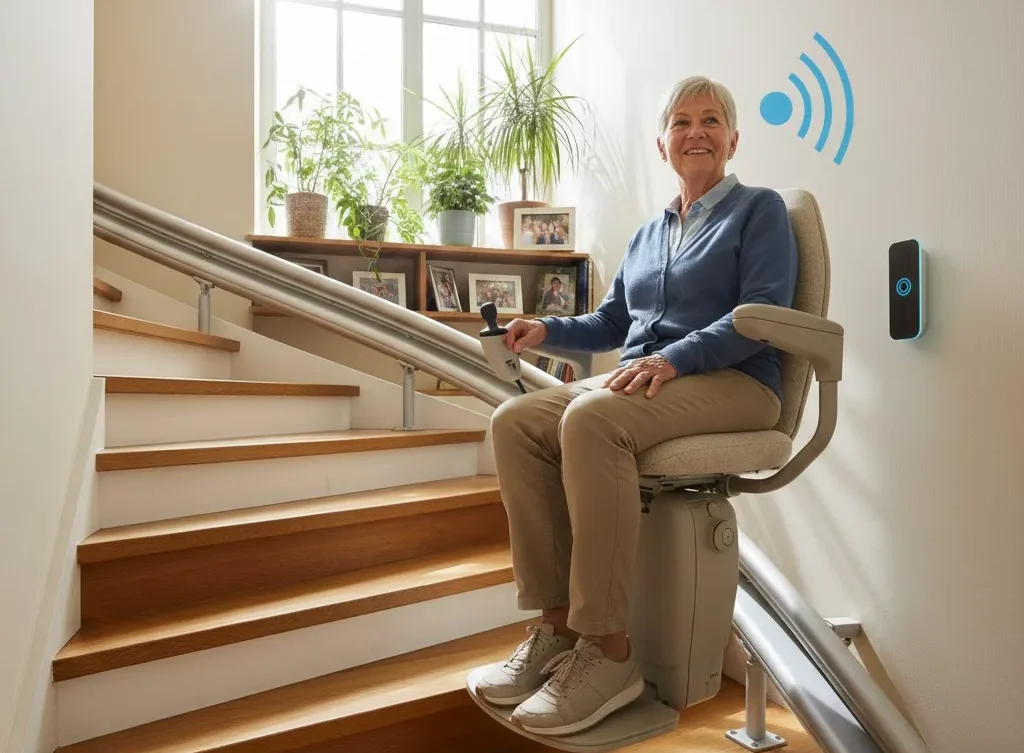
It doesn’t need any major construction. The rail is fixed directly onto the stair steps — not the wall — so there’s no breaking of tiles or walls. Installation usually takes just a day or two.
Stairlifts are mainly used by seniors or those with knee pain, arthritis, or mild mobility issues. They can still sit and stand on their own, or with some help.
What Is a Home Elevator (Residential Lift)?
A home elevator — also called a domestic lift or residential elevator — is essentially a small, compact elevator inside your home. It moves vertically between floors inside a shaft or a self-contained structure.
Unlike a stairlift, it doesn’t use the staircase at all. It works independently and can carry multiple people, wheelchairs, groceries, luggage, and more.

Modern home elevators in India come in hydraulic, traction, pneumatic (air-driven), and battery-operated variants. Some — like air-driven lifts — don’t even need a pit or machine room, making them easier to install in existing homes.
They take a few days to a few weeks to install, depending on the type.
What Is a Platform Lift (Wheelchair Lift)?
A platform lift is like a flat, open platform — without walls or a cabin — that moves vertically between two levels. The user stands, sits in a wheelchair, or uses a walker on the platform.
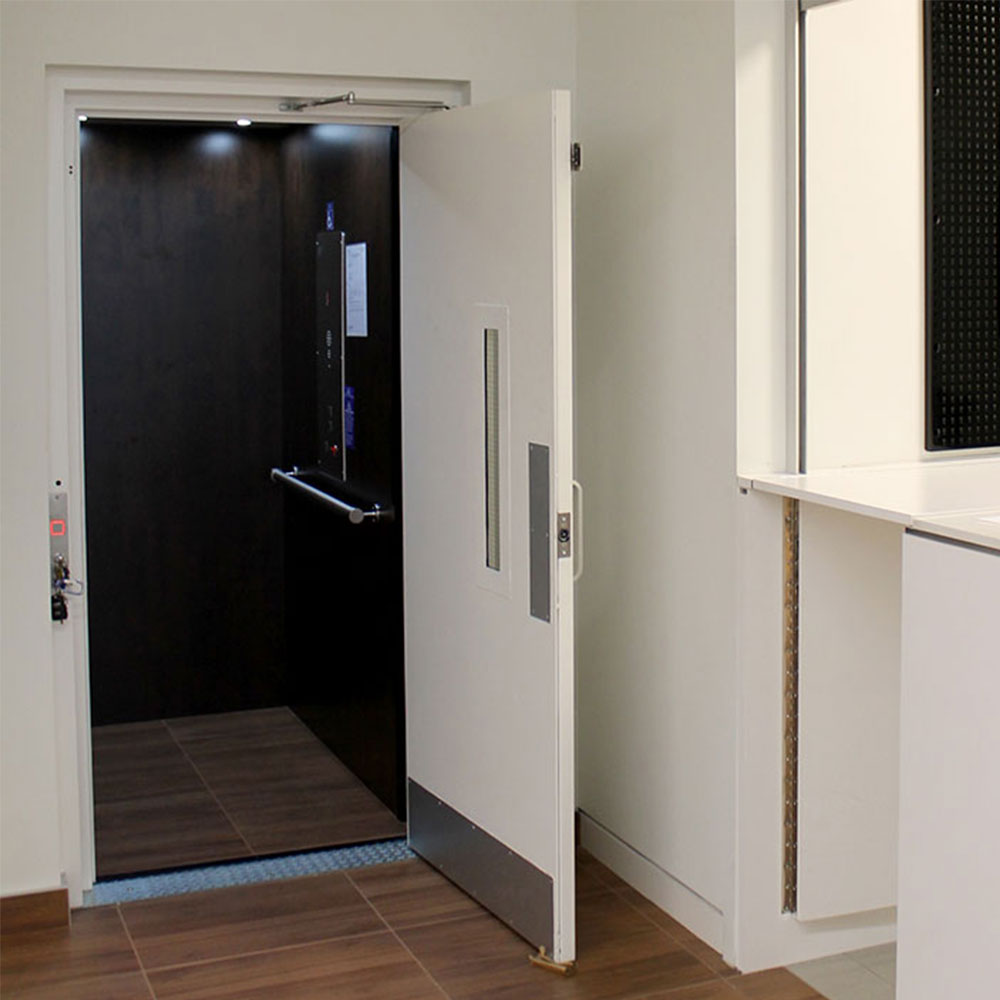
It’s different from a stairlift (which has a chair) and different from a home elevator (which has an enclosed cabin). It sits somewhere in between.
Platform lifts help wheelchair users who can’t use stairlifts. They are great for homes without enough space or money for a full elevator. They are also common as outdoor wheelchair lifts — for example, at the entrance of a home that has a few steps up from the gate.
Who Needs What? The Most Important Question First
Before comparing costs and features, ask yourself this:
Who will use it, and what do they need?
| User Type | Best Option |
| Senior with knee pain who can still sit/stand | Stairlift |
| Elderly parent who cannot climb stairs at all | Home Elevator |
| Full-time wheelchair user | Platform Lift or Home Elevator |
| Family with elderly + young children + luggage needs | Home Elevator |
| Temporary need (post-surgery recovery) | Stairlift (rented) |
| Multi-generational home, long-term investment | Home Elevator |
| Narrow home, tight budget | Stairlift or Platform Lift |
Detailed Comparison – Stairlift vs Home Elevator vs Platform Lift
1. Space Required
This is often the deciding factor in homes, especially in cities like Delhi, Mumbai, Bengaluru, and Hyderabad where homes can be compact.
Stairlift: Uses your existing staircase. No extra floor space needed. The rail is mounted on the steps, and the chair folds up when not in use. Works even on narrow staircases (as slim as 610 mm width). Straight staircases are easier and cheaper; curved or spiral staircases need a custom-built curved rail which costs more.
Home Elevator: Needs a dedicated vertical shaft — either inside the home or as a self-contained unit in a corner. Newer air-driven or pneumatic lifts are compact (roughly 1m x 1m footprint) and don’t need a pit or machine room. Still, you do need to plan for it structurally, which is easier in a home under construction.
Platform Lift: Needs vertical clearance but a smaller footprint than a home elevator. However, because it has no walls or cabin, it also needs some surrounding safety space. Often used outdoors or at entry points.
Verdict on Space: Stairlift wins for tight indoor spaces. Platform lifts are great for outdoor or entry-level height differences.
2. Cost in India (Estimates)
This is where most families make or break their decision. Here’s an honest ballpark:
Stairlift: Straight staircase models start from around ₹1.5 lakhs and can go up to ₹4–5 lakhs for curved or premium models. Some providers offer EMI options and rental plans. This makes them accessible for short-term needs, such as post-surgery recovery.
Home Elevator: This is a wider range. Basic home elevators cost about ₹5–8 lakhs. Premium models, which have glass cabins, smart controls, and air-driven tech, can reach ₹15–25 lakhs or even higher. Installation, civil work, and annual maintenance contracts add to the overall cost. That said, they add significant property value to your home — especially in urban India.
Platform Lift: Typically falls between ₹2–6 lakhs depending on the travel height, load capacity, and whether it’s for indoor or outdoor use.
Note: most states require a lift licence before installing, operating, or maintaining a home elevator. This includes a “licence to erect” for installation and a “licence to operate” for use. These are given by state authorities, such as the Electrical Inspectorate.
States like Maharashtra, Gujarat, Karnataka, Tamil Nadu, Delhi, Kerala, and Haryana have their own Lift Acts. Budget for this process when planning a home elevator.
Verdict on Cost: Stairlift is cheapest upfront. Platform lift is mid-range. Home elevator is the highest investment but the best long-term value.
3. Safety Features
Safety is non-negotiable — especially for elderly family members living alone or with young children around.
Stairlift: Includes seatbelts, obstruction sensors, and braking systems. However, risks may include slipping when getting in or out, or during sudden stops. Swivel seats (which rotate the chair to face away from the stairs before the user stands up) are a helpful safety feature to look for.
Home Elevator: Comes with automatic doors, emergency lowering, interlocks, backup power, and sensor-driven controls. The enclosed cabin and advanced safety systems make home lifts the safer option for varied users. Many modern home elevators also come with battery backup so they continue working during power cuts — very useful in cities where power outages are still common.
Platform Lift: Has guardrails, automatic brakes, and anti-slip surfaces. Since it’s open (no cabin), some users — especially those with balance issues — may feel less secure compared to an enclosed elevator cabin.
Verdict on Safety: Home elevator offers the most comprehensive safety. Stairlifts are safe for able-bodied seniors; less ideal for those with serious balance issues.
4. Who Can Use It
Stairlift: Designed for individuals with fewer mobility issues — those who can sit and stand with minimal assistance. Not suitable for full-time wheelchair users unless they can transfer from wheelchair to the stairlift seat.
Home Elevator: More users are covered, including wheelchair users, older people, and families who need to transport heavy objects between floors. Unlike stairlifts that can only carry one seated person, home lifts can transport multiple individuals.
Platform Lift: Ideal for wheelchair users. The platform is large enough to accommodate a wheelchair and a caregiver if needed. Also good for people who use walkers or crutches.
Verdict on Usability: Home elevator is the most versatile. Platform lift is the go-to for wheelchair users with limited budgets.
5. Installation Time and Disruption
Stairlift: Relatively easy to install. The track is mounted along the stairs and the lift can usually be fitted within a few days. Minimal disruption to the home is required.
Home Elevator: Takes longer — anywhere from a few days to a few weeks. If civil work (pit construction, shaft building) is involved, it can mean some dust and disruption. Air-driven/pneumatic lifts are faster to set up as they are self-contained units.
Platform Lift: Falls in between. Outdoor platform lifts are quicker. Indoor ones with pits take a few days.
Verdict on Installation: Stairlift is fastest and least disruptive. Ideal if you need a solution urgently.
6. Aesthetics and Interior Design
Families today care a lot about how their home looks — and rightly so. A mobility solution that looks clunky can be an eyesore in a beautifully designed home.
Stairlift: More visible and does not always complement the home’s aesthetic look. However, modern stairlifts come in sleek finishes and fold away neatly when not in use.
Home Elevator: Can be tailored to blend into any form of interior design. With hi-tech finishes and glass panels, home elevators can provide a touch of class whether installed in a modest home or an upscale villa. Many homeowners are now choosing a glass home elevator not just for mobility, but as a design statement.
Platform Lift: Functional-looking. Doesn’t add to the aesthetics. Fine for outdoor or utility use.
Verdict on Aesthetics: Home elevator wins by far. It can actually enhance your home’s visual appeal.
7. Maintenance
Stairlift: Simpler to maintain and generally has lower servicing costs. However, regular checks for battery performance and track stability are needed.
Home Elevator: Requires more frequent inspections and servicing due to its complexity. Maintenance costs can add up, but regular upkeep is essential to prevent costly repairs. Most providers in India offer Annual Maintenance Contracts (AMCs).
Platform Lift: Moderate maintenance. Mechanical parts like the scissor mechanism or hydraulic system need periodic checks.
Verdict on Maintenance: Stairlift is easiest and cheapest to maintain.
8. Long-Term Value and Future-Proofing
This matters a lot for multi-generational homes where the same house is lived in for decades.
If your need is specific, immediate, and budget-focused, a stairlift is a practical and effective solution. However, if you’re planning for long-term comfort, accessibility, and a future-ready home, a small home lift becomes the more versatile and scalable choice.
A home elevator adds property value — something a stairlift or platform lift does not. If you plan to sell your home someday, a residential lift can be a real selling point, especially in urban India’s premium housing segment.
Quick Summary Table
| Feature | Stairlift | Home Elevator | Platform Lift |
| Starting Cost | ₹1.5L | ₹5–8L | ₹2L |
| Space Needed | Low | Medium | Medium |
| Installation Time | 1–2 days | Days to weeks | 2–5 days |
| Wheelchair Access | No | Yes | Yes |
| Multi-user | No | Yes | Yes |
| Aesthetic Appeal | Low | High | Low |
| Safety Level | Moderate | High | Moderate |
| Maintenance | Low | Medium–High | Medium |
| Best For | Seniors, post-surgery | All users, long-term | Wheelchair users |
| Adds Property Value | No | Yes | No |
What Makes Homes Different — And Why It Matters
Multi-story homes have some unique characteristics that affect which option suits you best:
Multi-generational living: Most homes have grandparents, parents, and children all under one roof. A home elevator serves everyone — the dadi who needs support, the bahu carrying groceries, and the child with a heavy school bag. A stairlift serves only one person at a time.
Power outages: India still faces power cuts in many cities and towns. Always ask your provider about battery backup — this is a must-have, not an optional extra.
Vastu and space planning: Many homes are designed around Vastu principles, and adding a lift later can be tricky. If your home is under construction or renovation, this is the ideal time to plan for a home elevator.
Curved and spiral staircases: Many older bungalows and independent houses in India have curved or spiral staircases. Stairlifts for curved staircases exist but are significantly more expensive. A home elevator might actually be more practical and cost-effective in such cases.
Budget consciousness: Families tend to think carefully before big purchases. Stairlifts and platform lifts serve immediate needs at lower cost.
But if you’re thinking 10–15 years ahead — especially for an ageing parent — a home elevator is the wiser investment.
The Right Choice for Different Families
Here’s a simple way to decide:
Choose a Stairlift if:
- You have a senior at home with knee pain or mild mobility issues
- Budget is a priority and you need a quick, affordable fix
- The need may be temporary (post-surgery, short-term recovery)
- Your staircase is straight and narrow
- You just need one person to go up and down independently
Choose a Home Elevator if:
- You have a family member in a wheelchair or with serious mobility challenges
- You want a long-term, future-ready solution for your home
- Multiple family members will benefit from it
- You want to add real value and style to your home
- You’re building a new home or doing major renovation
- You live in a 3+ floor home
Choose a Platform Lift if:
- The primary user is in a wheelchair but the budget doesn’t allow a full elevator
- You need an outdoor lift — like at your home entrance with steps
- You need to bridge a small height difference (half-floor, entry steps, etc.)
- Your home has space constraints that make a full elevator impractical
Conclusion
There’s no single “best” option — the right choice depends on your family’s specific needs, your home’s structure, and your budget.
That said, here’s the honest bottom line:
A Vin Grace stairlift is an affordable and fast option. It’s ideal for seniors with mild mobility issues and for short-term needs. It’s a smart first step.
A home elevator is a smart, flexible choice for multi-story houses. It’s designed to last and meet various needs.
If your budget permits, it’s usually a better long-term investment. This is especially true for homes with elderly family members, wheelchair users, or families with multiple generations.
A platform lift is a great solution for wheelchair users. It helps with outdoor and entry-point access when a full elevator isn’t possible.
Choose a certified, reputable installer. They should follow safety standards, offer good after-sales service, and provide a maintenance plan.
Mobility solutions are not just products — they give your loved ones independence, dignity, and safety in their own home. That makes getting it right worth every rupee.
Frequently Asked Questions (FAQs)
Q1. Can a stairlift be installed on a curved staircase in India?
Yes, curved stairlifts are available in India. They need a custom rail that matches your staircase’s curve. This makes them much pricier than straight stairlifts—often 2 to 3 times more. In such cases, a home elevator may actually work out to be a more practical option.
Q2. Do I need government permission or a licence to install a home elevator in my house?
Yes, in most Indian states, you need a lift license from the Electrical Inspectorate or the relevant authority for home elevators. You’ll need a “licence to erect” before installation and a “licence to operate” before use. Stairlifts and platform lifts usually don’t need a formal license. But, always check with local authorities.
Q3. What is the maintenance cost of a stairlift in India per year?
Annual maintenance for a stairlift in India typically ranges from ₹5,000 to ₹15,000 depending on the brand and model. Many trusted providers have Annual Maintenance Contracts (AMCs). These contracts include regular servicing, battery checks, and small repairs.
Q4. Which is better for an elderly parent who lives alone — stairlift or home elevator?
A home elevator is safer for a senior living alone. It has an enclosed cabin, automatic doors, emergency lowering, and battery backup. If you’re on a budget, a stairlift with safety features like a swivel seat, obstruction sensors, and an emergency stop is a good option. Just make sure someone checks it regularly.
Q5. Can a home elevator be added to an existing house in India, or only during construction?
A home elevator can absolutely be added to an existing home. Modern air-driven lifts are self-contained. They need no pit or machine room. This makes retrofitting them into existing homes easier. That said, planning for it during construction is always more cost-effective and cleaner in terms of design.
Q6. Is a platform lift the same as a wheelchair lift?
Yes, a platform lift is often called a wheelchair lift or vertical platform lift. It’s a flat platform — without walls — that moves vertically, designed to carry wheelchair users and their caregivers. It’s different from a stairlift (which has a seat) and a home elevator (which has an enclosed cabin).