Thinking about adding a home lift or home elevator to your house? This guide offers everything you need in one place. You’ll find home lifts prices in India, home elevator costs, features, types, specifications, and a straightforward step-by-step buying guide.

A home lift is a small elevator built for houses, villas, and duplex homes. It is also called a residential lift, home elevator, glass elevator, or domestic lift. In 2026, more Indian families are opting for home lifts. They seek solutions for ageing parents, multi-floor homes, mobility needs, and daily comfort.
Who is this guide for?
This guide is for homeowners planning a lift. It’s for families with elderly or disabled members. It’s also for architects, interior designers, and builders of villas and independent homes. Anyone comparing home lift costs or elevator prices in India will find it useful.
Home Lifts Price in India – Quick Summary
| Lift Type | Starting Price | Best For |
|---|---|---|
| Hydraulic Home Lift | ₹12 lakh onwards | Low-rise homes, duplex houses |
| Traction (Gearless) Home Elevator | ₹15 lakh onwards | Tall homes, frequent daily use |
| Screw-Driven Home Lift | ₹16 lakh onwards | Homes with limited space for civil work |
| Commercial-Grade Home Elevator | ₹20 lakh onwards | Bigger cabins, offices attached to homes |
Note: These are starting prices. Your final home lift price depends on floors, cabin size, finish, and site work. Always ask for a written quote before you decide.
What Affects Home Lift Price and Home Elevator Cost?
- Number of floors (more floors mean more travel height and higher cost)
- Type of lift — hydraulic, traction, or screw-driven
- Cabin size and how many people it can carry
- Interior finish — steel, glass, wood, or mirror
- Civil work needed — pit, shaft, wiring
- Smart features — app control, automatic doors, remote monitoring
- City and site location
- After-sales service and warranty terms
Home Lift Price by Type
Hydraulic Home Lifts
The most affordable option. Smooth, quiet, and reliable. Best for low-rise homes and duplex houses. Hydraulic home lift price usually starts around ₹12 lakh.
Traction Home Elevators
Faster and more energy-efficient over time. Uses steel ropes or belts. Good for taller homes with frequent daily use. Priced a bit higher than hydraulic lifts.
Screw-Driven Home Lifts
Needs very little civil work – often no deep pit at all. Great for retrofitting older homes without major construction. Priced higher because of the space-saving, easy-installation design.
Home Lift Price by Number of Floors
| Floors | Price Range |
|---|---|
| 2 Floors | ₹12 lakh – ₹16 lakh |
| 3 Floors | ₹15 lakh – ₹20 lakh |
| 4 Floors | ₹18 lakh – ₹24 lakh |
| 5+ Floors | ₹22 lakh and above |
What’s Included in the Home Elevator Price?
A fair home lift cost quote should cover the cabin, doors, control panel, rail system, safety features (emergency stop, overload sensor, auto-rescue device), installation, and a one-year warranty.
Always confirm whether civil work and annual maintenance are included or charged separately — this is where many buyers get surprised later.
Home Lift Price by City
Home lift price in Delhi NCR usually starts from ₹12 lakh, with fast delivery and local support available. Prices in other metro cities like Mumbai, Bangalore, and Pune are broadly similar, with small changes based on site access.
Home lift cost in smaller towns may be slightly higher due to delivery and travel charges from the nearest service center.
Home Lift Features
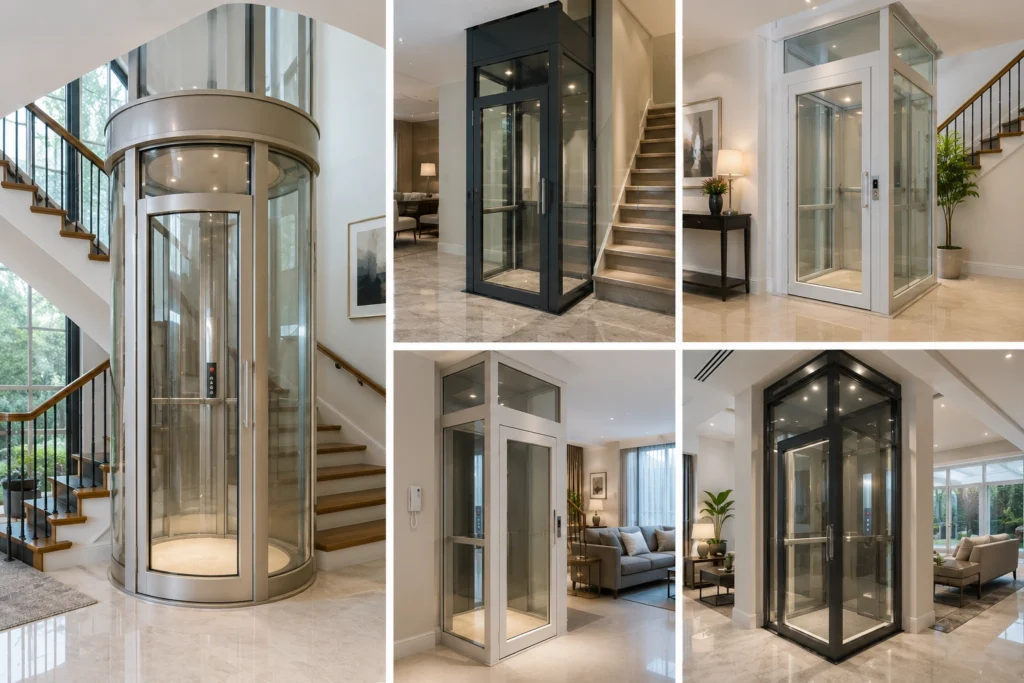
- Elegant, modern design that suits any home style
- Glass cabin with a clear outside view
- Compact size — fits into small spaces
- Low power use, energy efficient
- Smooth and quiet operation
- Strong, long-lasting build quality
- Smart controls — touch panel, app support, remote call button
- Easy access for elderly users and wheelchairs
- Low civil work — no deep pit or machine room needed in most models
Types of Home Lifts
- Residential Home Lifts – for homes and villas, easy to install
- Commercial Home Elevators – for offices, showrooms, higher footfall
- Hydraulic Home Lifts – budget-friendly, quiet operation
- Traction Home Elevators – fast, ideal for tall homes
- Screw-Driven Home Lifts – space-saving, minimal civil work
- Outdoor Home Lifts – weather-resistant, installed outside the house
Home Lift Specifications
- Power Supply: 220V, Single Phase
- Speed: 0.15 m/s
- Warranty: 1 Year
- Safety Features: Emergency stop, overload sensor, auto-rescue device
- Installation Time: 2–3 Days
- Certification: ISO 9001 Certified
Customization Options
- Cabin size (2 to 15 people)
- Automatic or manual doors
- Choice of interior material and lighting
- Control panel and safety upgrades
- Glass walls and mirror finish
- Smart, app-based operation
Home Lift Buying Guide – How to Get the Right Price
- Share your floor plan and number of floors to be served.
- Check if you already have pit or shaft space, or if you need a pit-less lift.
- Choose your cabin size and interior finish.
- Ask for a written quote that separates equipment cost, civil work, and maintenance cost.
- Compare at least two or three vendors on price, warranty, and after-sales service.
- Confirm response time for repairs and spare parts availability before you sign.
Home Lift Maintenance Cost
Home lifts generally need low maintenance. Most vendors offer an Annual Maintenance Contract (AMC) that covers regular servicing, safety checks, and minor repairs.
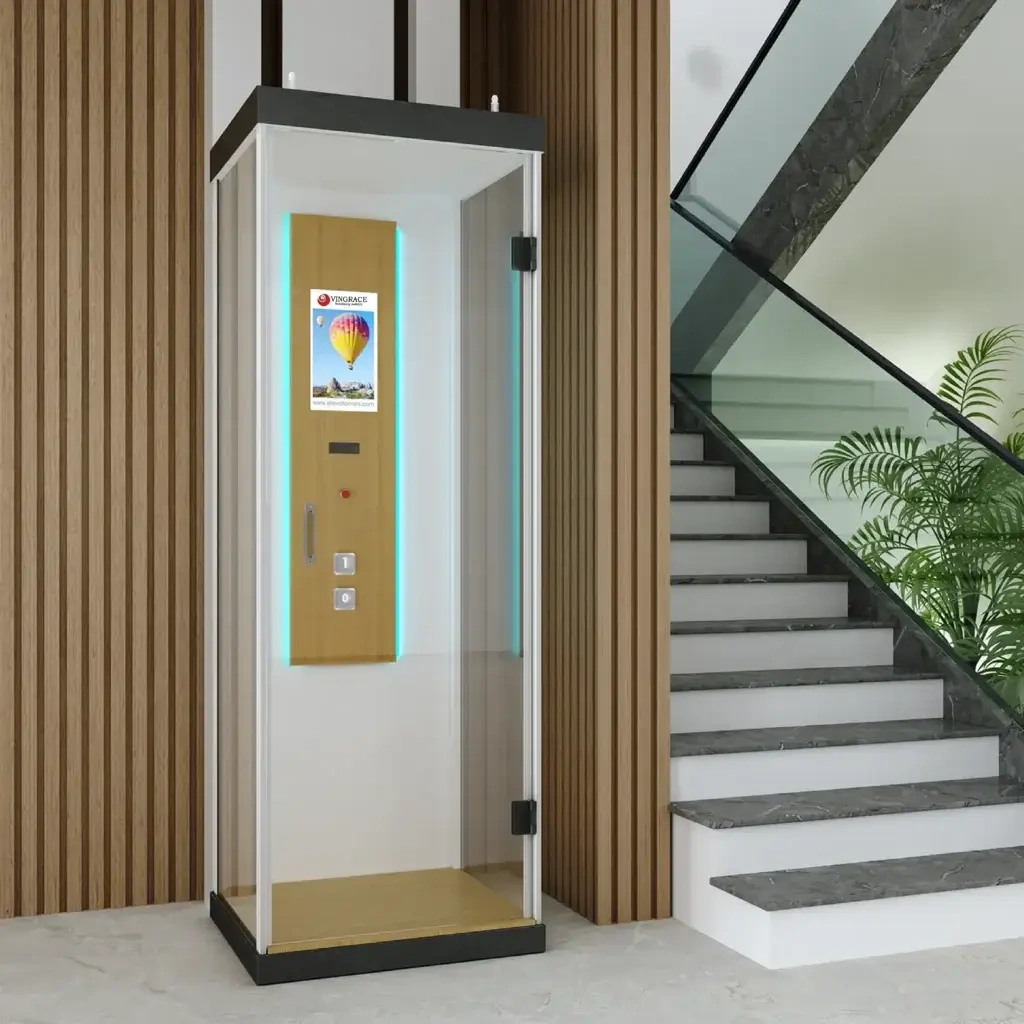
This adds a small yearly cost on top of the upfront home lift price, but it protects your investment and keeps the lift running safely for years.
Why Choose Vin Grace
- Load Capacity: Up to 238 KG
- Maximum Travel Height: 30 Meters
- Low maintenance, energy efficient
- Little to no civil work needed
- ISO 9001 Certified
- 1-Year warranty with support across India, including Delhi NCR
Frequently Asked Questions
Q. What is the home lift price in India in 2026?
Prices usually start from ₹12 lakh and increase based on lift type, number of floors, and features chosen.
Q. Is home elevator price different from home lift price?
No. Both terms mean the same product in India. The real price depends on floors, cabin size, and lift type — not the name used.
Q. What is the cheapest home lift option?
Hydraulic lifts are usually the cheapest and easiest to maintain, making them a popular first choice.
Q. Does the home lift cost include civil work?
Not always. Always check with your vendor whether civil work like pit construction or wiring is included or billed separately.
Q. Do home lifts need regular maintenance?
No heavy maintenance is needed. A yearly maintenance plan (AMC) is usually enough to keep the lift running smoothly.
Q. Can I install a home lift in my existing house?
Yes. Most home lifts today need little to no pit, so they can be added to existing homes with only small changes.
Q. How long does home lift installation take?
Most home lifts can be installed within 2 to 3 days, depending on site readiness and customization.
For a free consultation and an exact home lift price in India for your home, contact Vin Grace today.