In many Indian homes, like older Delhi apartments, compact bungalows, or narrow townhouses, the staircase is tight. You need full access for family members, kids running up and down, or carrying groceries.
A bulky stairlift can block the way. But folding stairlifts—also known as space-saving stair chair lifts, fold-up stairlifts, or compact mobility aids for narrow stairs – solve this issue perfectly.
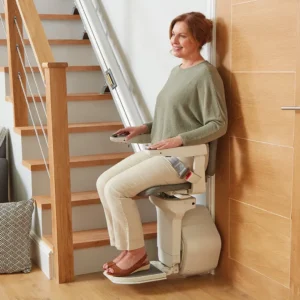
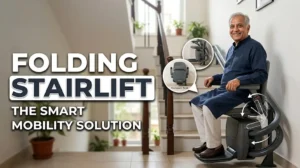
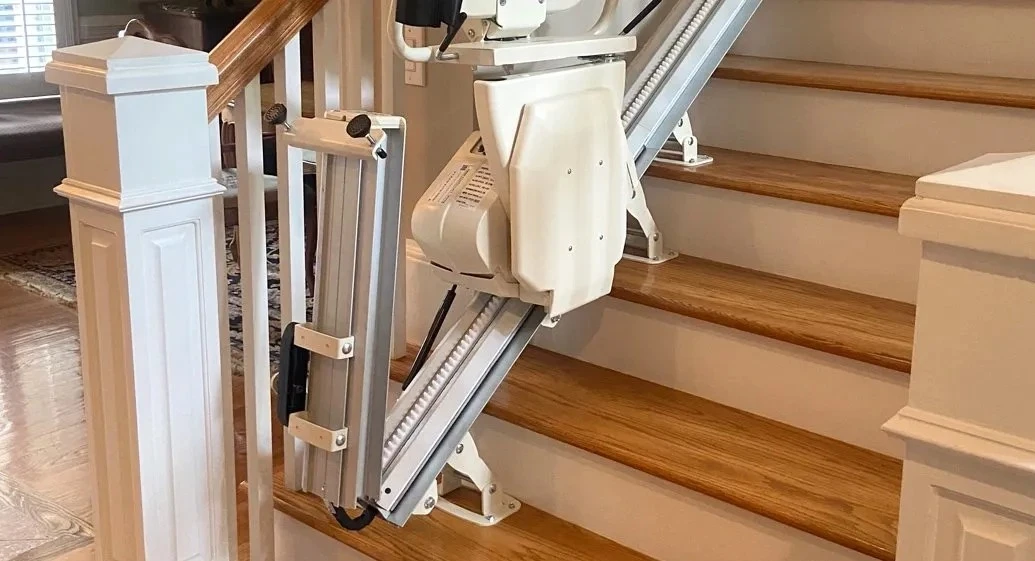
When not in use, the seat, footrest, and armrests fold neatly away, leaving the stairs almost as clear as before.
These designs are ideal for narrow homes where every inch counts. In 2026, leading brands like Acorn, and Handicare offer sleek models. You can find these through providers like Vingrace.
They come with smart folding features and slim designs. If your staircase is narrow, often under 800mm, and you want to keep things tidy, this guide is for you. It explores how folding stairlifts function, their benefits, types, installation tips, and more.
Overview to Space-Saving Stairlifts
Space-saving stairlifts focus on minimal footprint. Standard straight models mount to the stairs (not the wall in most cases) with a single slim rail. The key space-saver? Everything folds:
Seat flips up against the rail.
Footrest lifts up (often linked to the seat for automatic folding).
Armrests fold inward.
When folded, the unit sticks out only 11–13 inches (about 280–330mm) from the wall or rail. This makes it ideal for narrow staircases in Indian homes. Many models need only 29–31 inches (730–790mm) of staircase width to operate safely.
These narrow staircase stairlifts are popular in Delhi and all over India. They help seniors and those with mobility challenges reach upper floors easily, without needing big changes to their homes.
Battery-powered with backup for power cuts, quiet motors, and safety sensors make them reliable daily helpers.
The Challenges of Narrow Homes
Narrow stairs are common in India. You can spot them in old Delhi havelis, up steep apartment flights, or in modern flats with little space. Typical issues:
Width under 800mm leaves little room for a fixed chair.
Family needs the full staircase for walking, especially with kids or multiple generations.
Doors at landings or bottom steps get blocked by rails.
Clutter from non-folding designs creates trip hazards.
Without folding features, a stairlift turns a narrow passage into an obstacle course. Folding designs solve this problem by tucking away when parked, usually at the top or bottom. This keeps stairs usable for everyone.
Folding Stairlift Designs: How They Work
Modern folding stairlifts use clever mechanics:
Manual folding — You lift the seat up (like folding a cinema seat), which pulls the footrest up via linkages. Armrests fold manually inward. Simple, reliable, no extra motors.
Powered folding — Press a button (on remote or armrest) to automatically fold/unfold seat and footrest. Great for limited strength.
Linked mechanisms—folding one part, like the seat or armrest, triggers the others. This makes it convenient and user-friendly.
Slim rail profiles—Single-tube or narrow rack-and-pinion rails (some as slim as 5–8 inches from the wall)—reduce obstruction.
When parked, the chair sits flat against the rail, often with a parking brake. Some include hinged/folding rails for doorways—rail section folds up automatically or manually.
Brands like Acorn (Superglide 130 series), Handicare (1000/1100), and Bruno (Elan) shine with their compact, foldable designs. These are perfect for tight spaces.
Key Benefits of Folding Stairlifts when Not in Use
Folding stairlifts shine in narrow homes:
Maximum staircase access — With a folded width of 11–13 inches, others can walk freely without squeezing past.
Safety for family — No permanent blockage reduces trip risks for kids, visitors, or caregivers.
Aesthetic appeal — Tucked-away look keeps home neat and stylish—no bulky fixture dominating the stairs.
Versatility — Easy for multi-user households; park at top/bottom as needed.
Ease for user — Quick fold/unfold (seconds with powered options) means less hassle.
Value in small spaces — Perfect for apartments or older homes where full lifts can’t fit.
Plus, these models retain top safety: obstruction sensors, seat belts, swivel seats, and smooth rides.
Types of Folding Mechanisms (Manual vs. Powered)
Manual Folding
Pros: Cheaper, simpler, no extra power draw, reliable long-term.
Cons: Requires manual effort—may be hard for some users.
Best for: Budget-conscious homes or users with good arm strength.
Examples: Many Acorn straight models, basic Handicare options.
Powered Folding
Pros: Effortless—one button folds seat/footrest; ideal for arthritis or weakness. Often includes powered swivel seat.
Cons: Slightly higher cost, minor added complexity.
Best for: Comfort-focused users or premium setups.
Examples: Upgraded Bruno Elan, Handicare models, some Otolift variants.
Many 2026 models offer both—start manual and upgrade powered later. Linked auto-fold (armrest fold triggers footrest) is common for convenience.
Installation Considerations for Tight Spaces
Fitting a folding stairlift in narrow homes needs planning:
Minimum width — Most need 29–31 inches (730–790mm) for safe ride; check your stairs.
Rail mounting — Usually to treads; professional survey ensures no interference.
Parking positions — Choose top/bottom park; powered folding rails for doors/landings. No major changes. Usually installed without wall drilling, causing little disruption. It often takes about 2–4 hours.
Professional assessment — Free home visit measures angles, width, turns—crucial for narrow fits.
Power — Battery backup essential for Indian outages; plug-in charging at parking spots.
Vingrace experts handle Delhi/NCR installs, ensuring perfect fit for narrow Indian staircases.
Conclusion
A folding stairlift makes narrow homes accessible when not in use. Smart space-saving designs, like fold-up seats and linked footrests, help you feel independent. Slim rails also add to this freedom.
You don’t have to sacrifice family access or your home’s look.
In 2026, Acorn, Handicare, Bruno, and others offer great solutions for narrow stairs in India. Don’t let tight spaces limit mobility—reach out to Vingrace for a free home assessment.
They’ll measure your staircase, explain folding options, and provide transparent pricing.
Stay in your beloved home, move freely, and keep those stairs open for everyone. A compact folding stairlift makes it all possible—comfortably and safely.
Frequently Asked Questions (FAQs)
Q. How narrow can my staircase be for a folding stairlift?
Most models work on staircases as narrow as 29–31 inches (730–790mm). Folded, they protrude only 11–13 inches, leaving plenty of walking space. A free survey confirms compatibility.
Q. Does folding the stairlift make the stairs completely clear?
Almost—folded depth is slim (around 280–330mm), so family walks easily. No full blockage like fixed chairs.
Q. Are powered folding options worth the extra cost?
Yes, if you have limited strength—they fold with a button. Manual is fine and cheaper for many.
Q. How much does a space-saving folding stairlift cost in India in 2026?
Straight folding models cost between ₹1.2 lakhs and ₹4 lakhs, including installation. Prices vary based on the brand and features. Narrow-fit premiums add little. Get a free quote for exacts.
Q. Can I install a folding stairlift myself?
No—professional installation is required for safety and warranty. Teams like Vingrace handle measurements, fitting, and testing quickly.