Choosing the right mobility solution is a crucial decision for families looking to make their homes more accessible. In India, where multi-story houses and apartments are common, navigating stairs can become a significant challenge for elderly family members or those with mobility issues.
The two leading options to solve this are stairlifts and home elevators. But how do you decide between them?
This details guide will explore the debate of stairlifts vs home elevators, offering a detailed comparison to help you determine which is the ideal fit for your home and family’s needs.
We will cover everything from cost and installation to space requirements and user convenience, providing a clear stair lift comparison and analysis of the home elevator vs stairlift India debate.
Understanding the Core Differences – Stairlifts vs Home Elevators
Before diving into the specifics, it’s important to understand what each solution does.
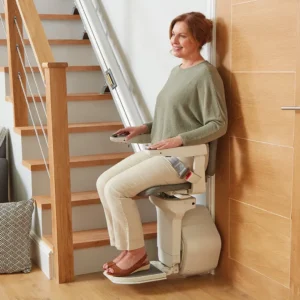
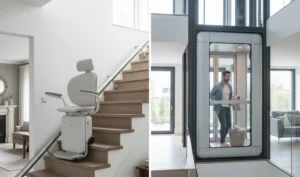
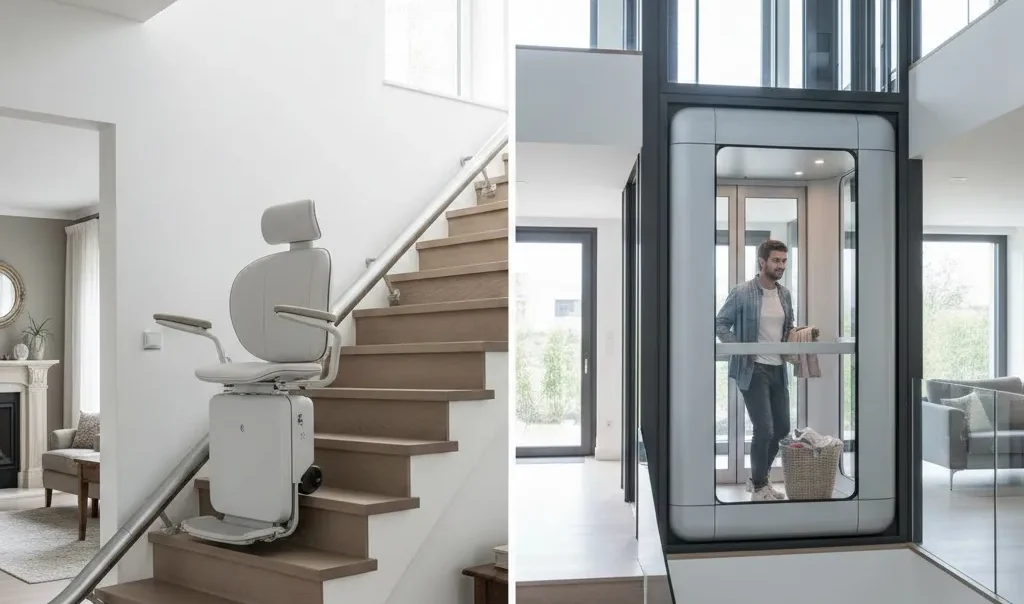
- A stairlift is a motorized chair that travels along a rail mounted to your existing staircase. It is designed to transport one person at a time from one floor to another, following the path of the stairs.
- A home elevator (or residential lift) is a small, enclosed cabin that moves vertically between floors through a dedicated shaft. It can typically carry multiple people, a wheelchair user, or even small items.
The fundamental difference lies in their function and integration into the home. A stairlift adapts to your current staircase, while a home elevator requires dedicated structural space. This core distinction is central to the stairlifts vs home elevators decision.
Factor 1: Installation and Structural Impact
One of the biggest differentiators when considering stairlifts vs home elevators is the installation process.
Stairlift Installation
Stairlifts are known for their minimally invasive installation. The rail is attached directly to the stair treads, not the wall. This means there is no need for major construction, rewiring, or structural changes to your home.
- Process: A straight stairlift can often be installed in just a few hours. A custom-curved stairlift, designed for stairs with turns or landings, might take a bit longer but is still a relatively straightforward process.
- Impact: The impact on your home is minimal. If you decide to remove the stairlift later, only small screw holes in the treads will remain, which can be easily repaired.
Home Elevator Installation
Installing a home elevator is a significant construction project. It requires creating a vertical shaft, or hoistway, that runs through each floor the elevator will serve.
- Process: This involves architects, contractors, and significant building work, including cutting through floors and ceilings, electrical work, and finishing. The entire project can take several weeks or even months.
- Impact: A home elevator permanently alters the structure of your house. It requires careful planning to ensure it fits within your home’s layout without compromising structural integrity. This makes it a less flexible option, particularly for existing homes.
For those looking for straightforward mobility solutions for apartments or retrofitting an existing house, stairlifts offer a clear advantage in terms of ease of installation. The decision of stairlifts vs home elevators often starts here.
Factor 2: Space Requirements
Space is a premium in many Indian homes. How much room does each solution require?
Stairlifts: Space-Saving by Design
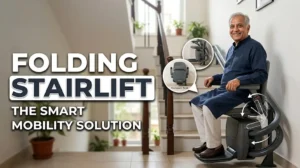
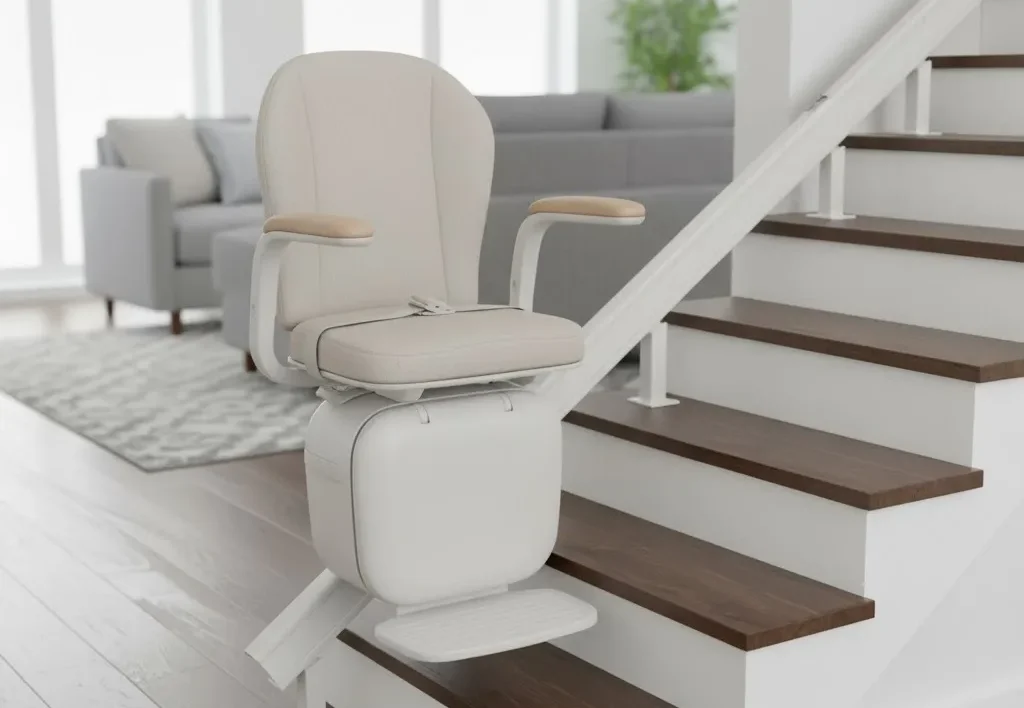
Modern stairlifts are designed to be compact. Features like fold-up seats, armrests, and footrests create a slim profile when the lift is not in use. This ensures the staircase remains open and accessible for other family members to walk up and down. Because they use the existing staircase, they do not take up any additional floor space in your rooms.
Home Elevators – A Significant Footprint
A home elevator requires a dedicated footprint on every floor it serves, typically around 15 to 25 square feet. This space is needed for the elevator shaft and machinery. In an existing home, this might mean sacrificing a closet, part of a room, or building an external shaft, which adds to the complexity and cost. When considering stairlifts vs home elevators, the space trade-off is substantial.
Factor 3: Cost and Financial Investment
The financial aspect is a major factor in the home elevator vs stairlift India discussion.
Stairlift Costs
Stairlifts are the more budget-friendly option. The cost depends on whether your staircase is straight or curved.
- Straight Stairlifts: These are the most affordable, with costs running significantly lower than any home elevator.
- Curved Stairlifts: These require a custom-made rail, making them more expensive than straight models but still considerably less costly than a home elevator.
Ongoing costs include routine maintenance and electricity, though modern stairlifts are highly energy-efficient and often run on rechargeable batteries.
Home Elevator Costs
Home elevators represent a major financial investment. The price can be five to ten times that of a high-end curved stairlift. The final cost depends on the number of floors, the type of drive system (hydraulic, traction, etc.), and the level of interior customization.
In addition to the unit itself, you must budget for the construction, labor, and potential architectural fees. Ongoing maintenance costs are also higher.
For most families, the economics of stairlifts vs home elevators points toward the stairlift as the more accessible choice.
Factor 4: User Convenience and Application
How does each mobility solution serve the user? This stair lift comparison looks at day-to-day use.
Stairlift Convenience
Stairlifts are ideal for individuals who can sit and stand with relative ease, even if they cannot manage stairs. The swivel seat feature allows users to safely get on and off the chair by turning it to face the landing.
They are designed for a single user and are perfect for restoring independence in moving between floors. Remote controls also allow a family member to call the lift if it’s on another floor.
Home Elevator Convenience
A home elevator offers greater versatility. It can transport:
- Multiple people at once.
- A wheelchair user without requiring a transfer.
- Heavy items like laundry, luggage, or groceries.
This makes it an excellent choice for households with a full-time wheelchair user or for those who need to move more than just one person between floors. The argument for stairlifts vs home elevators shifts if a wheelchair is the primary mode of mobility.
Which is the Right Choice for Your Indian Home?
So, in the matchup of stairlifts vs home elevators, which is better for you?
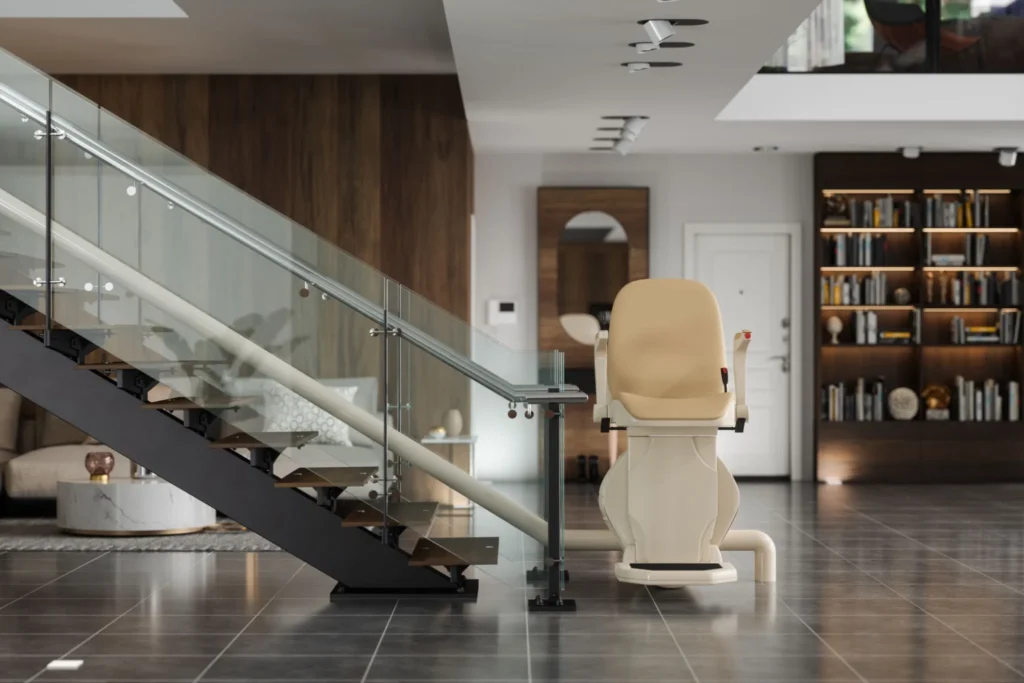
A stairlift is likely the ideal choice if:
- You live in an existing home and want to avoid major construction.
- Your budget is a primary consideration.
- The primary user can sit, stand, and transfer to the chair.
- You need to keep the staircase accessible for other family members.
- You are looking for quick and easy mobility solutions for apartments.
A home elevator might be the better choice if:
- You are building a new home and can incorporate the design from the start.
- Budget is not a major constraint.
- The user is dependent on a wheelchair and cannot transfer easily.
- You need to transport multiple people or heavy items between floors.
- You are looking for a long-term solution that adds significant real estate value.
Final Thoughts on Stairlifts vs Home Elevators
For the vast majority of Indian families seeking to improve accessibility in their existing homes, a stairlift presents a practical, affordable, and effective solution. It addresses the immediate challenge of stair navigation without the cost, time, and disruption of a major construction project.
The debate over stairlifts vs home elevators ultimately comes down to individual needs, your home’s structure, and your budget. By carefully evaluating these factors, you can make an informed decision that enhances safety, restores independence, and improves the quality of life for your entire family.
FAQs
Q. Which option requires more structural change to my home?
The installation process for a home elevator is far more complex, requiring significant structural changes like creating a dedicated shaft through your floors. In contrast, a stairlift is minimally invasive as it mounts directly onto your existing stair treads, not the walls, preserving your home’s structure.
Q. How do these two mobility solutions compare on cost?
There is a major difference in the cost comparison. A stairlift is a much more affordable option, often costing just a fraction of a home elevator. Home elevators are a major investment that includes the unit price plus substantial construction and labor costs, making stairlifts the budget-friendly choice for most families.
Q. Which is better for improving home safety quickly?
A stairlift is the faster solution for immediately improving home safety. Installation can take as little as a few hours, providing a quick and effective way to eliminate the risk of falls on the stairs. A home elevator project can take weeks or months to complete before it can be used.
Q. Is a stairlift or an elevator better for wheelchair users?
A home elevator generally offers better accessibility for full-time wheelchair users, as it allows them to roll directly into the cabin without transferring. While stairlifts are excellent mobility solutions for those who can move from a wheelchair to the lift’s seat, an elevator provides a more seamless transition for wheelchair-dependent individuals.
Q. Can a stairlift be installed in an apartment building?
Yes, stairlifts are often an ideal solution for improving accessibility within a multi-level apartment, provided the staircase is part of your private living space. Due to the complex installation and structural requirements, getting approval and space for a personal home elevator in a shared apartment building is usually not feasible.